
Northern Virginia roof underlayment sits beneath the roof covering, so homeowners rarely see it once a project is complete. Yet this concealed layer has an important role in managing water that gets past the outer covering. Understanding that role can help you ask better questions about a proposed roof replacement.
Shingles are the visible weather-exposed surface of many homes. Underlayment provides secondary protection beneath them; it is not a finished roof or a promise against leaks. This guide explains the main material types, their limits, and the details worth discussing with a roofing professional.
What Is Roof Underlay?
Think of a typical sloped roof as several parts with different jobs. The roof covering sheds weather. Below it, underlayment forms a separate water-management layer over the roof deck. The deck, also called sheathing, provides the surface that supports those layers.
Rafters or trusses support the deck beneath it. Therefore, a sheet of underlayment cannot replace sound wood sheathing or structural framing. Likewise, flashing directs water at vulnerable joints and openings; it is not simply another name for underlayment.

These relationships describe a basic residential sloped-roof concept, not every possible assembly. Low-slope roofs require separate assessment of their coverings, membranes and drainage. A detail suitable beneath asphalt shingles may not suit a different roof.
Why Northern Virginia Roof Layers Matter
Rain, wind-driven precipitation and seasonal temperature changes give homeowners reasons to consider the whole roof assembly. However, the same material choice will not suit every property. Roof shape, slope, covering and existing condition all affect the discussion.
For a Northern Virginia roof underlayment project, ask how the proposed layers work together. For example, a roof with several valleys and wall intersections needs attention to those transitions. A material name alone does not explain how the contractor will address them.
Common Roof Underlay Types
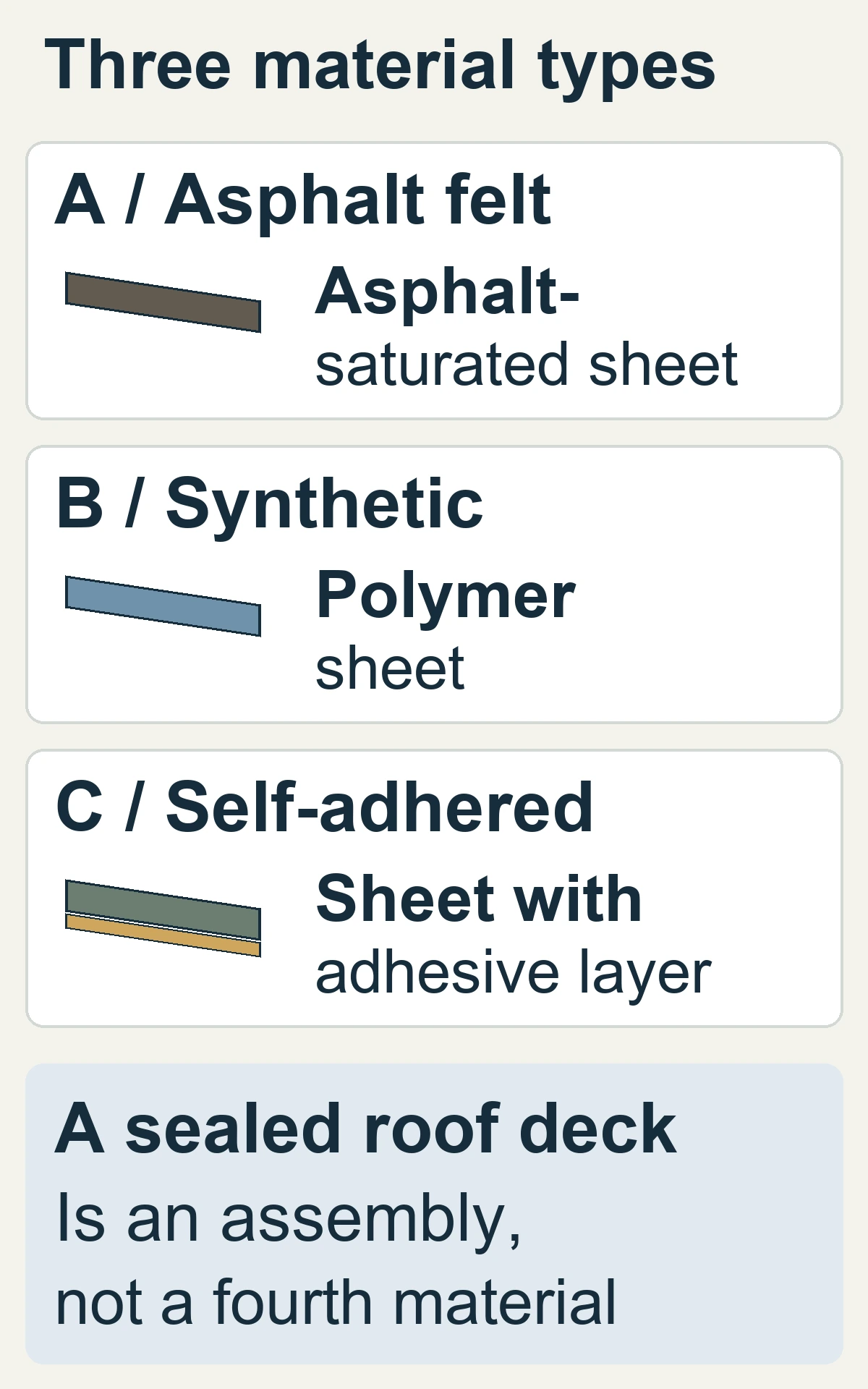
The Asphalt Roofing Manufacturers Association’s underlayment bulletin identifies felt, self-adhering products and non-asphaltic synthetics beneath asphalt shingles. These are broad families, with differences among individual products. Compare the specified product and assembly instead of assuming one family always wins.
Felt Underlayment for a Virginia Roof
Felt uses an asphalt-saturated sheet to provide a water-resistant layer. It is different from the wood deck underneath. Ask which felt product the proposal specifies and whether it suits the roof covering. The familiar name “roofing felt” should not stand in for a clear material description.
Synthetic Underlayment for a Virginia Roof
Synthetic sheets use polymers rather than traditional asphalt-saturated felt. Product properties and instructions vary, including permitted exposure and compatible applications. As a result, the word “synthetic” does not establish a complete performance specification or make an exposed roof safe from rain.
Self-Adhered Underlayment for a Virginia Roof
Self-adhered membranes bond to a suitable surface through an adhesive layer. Some products serve as leak barriers in specified locations or assemblies. However, adhesion depends on the actual surface and installation conditions. Their use requires compatibility checks, not a blanket assumption that more membrane is always better.
How Roof Layers Manage Water
The outer covering handles direct weather exposure. If water passes it, the layers underneath must manage that water without directing it into vulnerable joints. Thus, overlaps, transitions and connections matter as much as the presence of a sheet.
Water-resistant sheet underlayment is not a waterproof temporary roof. Seams and fastener penetrations can still admit water, even if a product resists damage from sunlight. Therefore, an exposure rating should not become a promise that an unfinished roof will keep belongings dry.
During Northern Virginia roof underlayment planning, discuss how the contractor will manage weather while work is underway. Ask for a clear explanation of temporary protection and the finished assembly. This is a project-planning question, not an invitation to install a temporary covering yourself.
Roof Underlay and Flashing
Why Flashing Still Matters
Flashing handles transitions that a broad sheet cannot address on its own. For example, a wall meeting a roof needs a coordinated water-shedding detail. Our roof flashing guide explains those leak points in more detail. Underlayment supports that work; it does not replace it.
Why Eaves and Valleys Matter
Eaves mark the lower roof edge, while valleys bring intersecting roof slopes together. Both deserve attention when discussing water flow. The Department of Energy’s roof-edge guidance for high-wind zones highlights specialized edge conditions. Its recommendations are not universal legal requirements for Northern Virginia homes.
Why Openings Need Details
Pipes, vents and chimneys interrupt the roof surface. DOE’s guidance on sealing roof penetrations describes integrating flashing or suitable membranes with underlayment. The useful homeowner takeaway is coordination: ask how the proposed materials connect around each opening, rather than requesting a generic bead of sealant.
Standard Underlay and Sealed Decks
A sealed roof deck is an assembly with specific details, not simply a fourth interchangeable roll material. Ordinary underlayment alone does not automatically create one. Depending on the system, sealing may involve treated deck joints, particular layers, or a specified self-adhered assembly.
The IBHS 2025 FORTIFIED technical resources describe distinct sealed-deck methods for different coverings. Those methods belong to a defined program with its own standards and documentation. They do not mean that every local roof must meet FORTIFIED requirements.
If someone proposes a sealed deck, ask which documented assembly they mean and how they will verify it. Also ask how it fits the roof’s moisture-control and ventilation design. This article does not establish FORTIFIED certification or installation qualifications for Novum.
What Roof Underlay Cannot Fix
A new membrane cannot restore rotten decking, correct structural damage or compensate for poor workmanship. It also cannot substitute for missing roof covering, proper flashing or sound drainage details. Consequently, a leak investigation should identify the cause before selecting a material.
Interior moisture may come from condensation or another source rather than rain passing through the roof. Similarly, underlayment does not correct an unsuitable ventilation assembly. Our ice dam guide discusses related roof-edge moisture concerns without treating a membrane as the whole solution.
Questions Before Northern Virginia Roof Work
Which Roof Covering?
Start with the proposed covering and the actual roof conditions. Underlayment selection must fit that assembly. If you are still comparing exterior surfaces, review our roofing material comparison, then ask how the supporting layers relate to your choice.
Choosing Virginia Roof Underlayment
Request the product name and its intended use, including any different material at vulnerable areas. Also ask how the contractor will assess the deck before covering it. A Northern Virginia roof underlayment proposal should explain the scope clearly enough for you to compare it with another proposal.
Which Critical Details?
Discuss valleys, roof edges, wall connections and penetrations. In addition, ask what happens if removal reveals damaged sheathing or another concealed problem. Clarifying how findings will be documented and discussed is more useful than assuming the initial scope covers every hidden condition.
Which Instructions Apply?
Ask how the materials comply with applicable manufacturer instructions and local requirements. Confirm any warranty terms from the actual written documents. Product coverage and workmanship commitments may differ; this article does not promise a particular warranty or approval.
Can You Spot a Hidden Problem?
Most underlayment remains concealed beneath the finished roof. Therefore, looking from the yard cannot establish its condition. A ceiling stain, missing shingle or recurring leak may justify investigation, but none identifies underlayment failure by itself.
Record when moisture appears and whether the same area becomes wet again. Photos taken safely from inside or from the ground can help explain the pattern. However, a professional still needs to assess the possible source and appropriate scope of work.
Safe Homeowner Checks
Keep observations to safe, accessible areas. Note interior staining, recurring dampness or visible roof damage from the ground. Avoid standing beneath damaged ceilings, unstable limbs or loose roof materials. If water threatens electrical equipment, keep clear and seek qualified help.
Do not walk on the roof, climb ladders to inspect hidden layers, remove shingles or lift metal panels. Also leave structural repairs and suspect hazardous materials to appropriate professionals. Northern Virginia roof underlayment decisions should follow a safe assessment, not a homeowner opening the assembly to investigate.
Frequently Asked Questions
Is Virginia Roof Underlayment Waterproof?
That depends on the product and assembly. Water-resistant sheet underlayment is not a guaranteed waterproof finished roof. Even a suitable waterproof membrane needs correct joints, transitions and compatible components. Always distinguish a material claim from the performance of the complete roof.
Are Felt and Synthetic Sheets the Same?
No. They use different materials, and individual products have different instructions and properties. Both can serve an underlayment role in suitable assemblies. Therefore, compare the actual specification instead of choosing by a broad label alone.
Does a Northern Virginia Roof Need an Ice-and-Water Membrane?
No single answer fits every roof or every location. The covering, slope, project conditions, applicable code and manufacturer requirements determine suitable use. Ask the contractor to explain the basis for the proposed coverage rather than assuming a universal rule.
Can It Be Replaced Without Removing the Covering?
Because it lies beneath the covering, access generally requires removing the covering over the affected area. The repair scope depends on the assembly and condition. Do not lift shingles or panels to investigate; ask a professional what access and restoration the work would involve.
Final Thoughts
Northern Virginia roof underlayment choices make sense when you consider the full roof: sound decking, suitable covering, coordinated flashing and careful details. For help discussing your roof’s condition and project scope, explore Novum’s roofing services. A clear explanation of the proposed assembly is a useful starting point.