
Northern Virginia roof flashing helps guide rainwater past vulnerable roof joints, walls, and openings. It works with the surrounding roof rather than forming a waterproof seal on its own. For homeowners, understanding those connections makes a leak assessment easier to follow.
A ceiling stain can raise questions about flashing, but it cannot identify the cause. This guide explains common details, possible warning signs, and questions to ask before agreeing to repairs. It also separates safe observations from work that belongs with qualified professionals.
What Is Northern Virginia Roof Flashing?
Roof flashing includes shaped materials and connected details that direct water away from joints and penetrations. A penetration is an opening through the roof, such as a vent pipe. Flashing helps continue the drainage path around that interruption.
However, flashing is not one universal product. Its design depends on the roof material, slope, wall construction, and opening involved. Underlayment, roofing, and wall drainage layers must work together. Product instructions and applicable building requirements also shape the detail.
Why Roof Flashing Matters
Water needs a clear route down and off the roof. At a wall or opening, that route becomes more complex. For example, a sound roof covering cannot compensate for every gap at an adjoining chimney. The Department of Energy’s water-managed roof assembly guidance explains this layered approach.
Therefore, evaluating northern Virginia roof flashing means looking beyond the visible metal. A professional may also need to assess the materials beneath it. A neat-looking surface alone does not prove that the whole connection drains correctly.
Common Northern Virginia Roof Flashing Locations
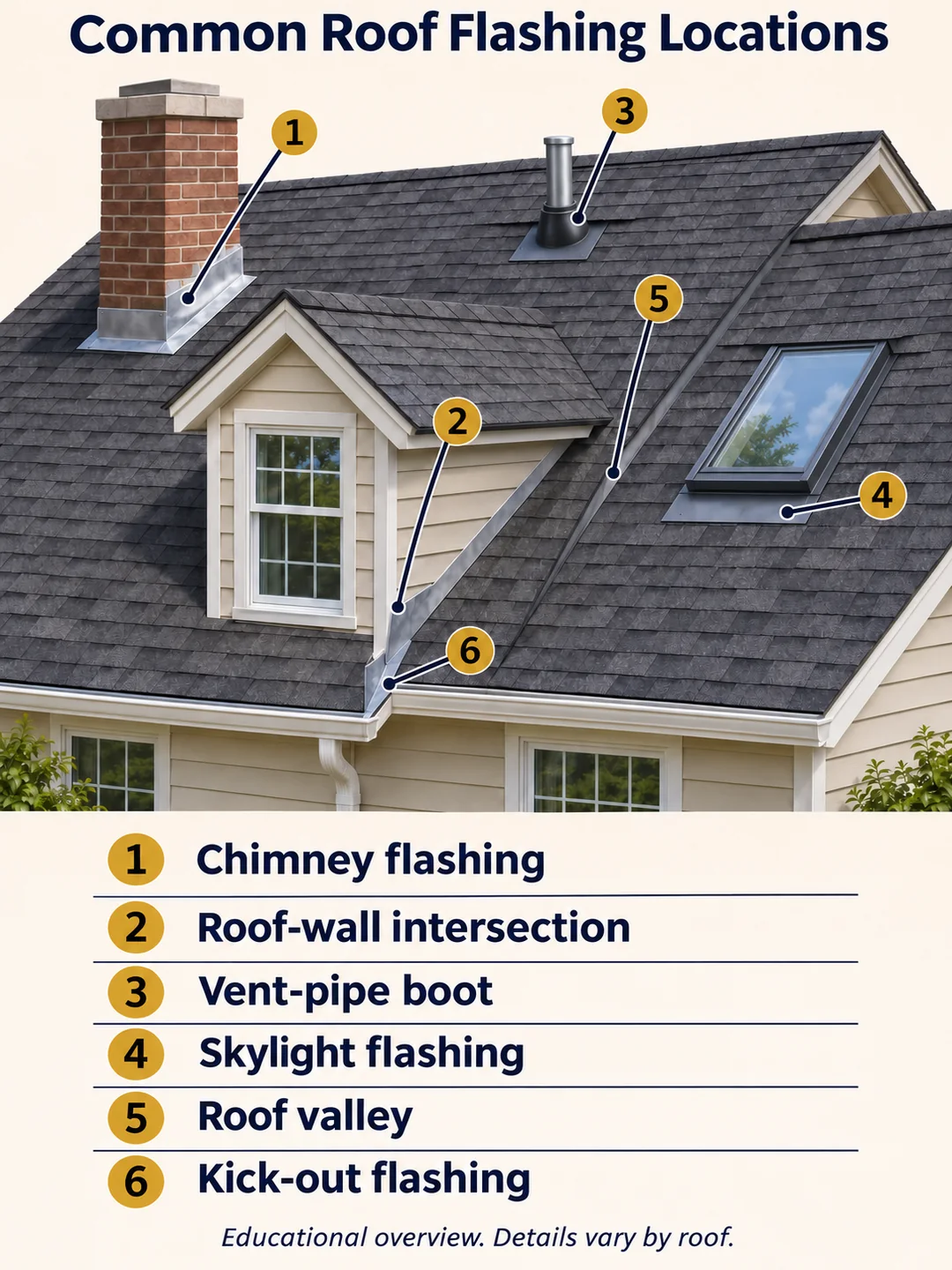
Dormers, chimneys, pipes, and skylights create different roof connections. Meanwhile, valleys collect runoff from adjoining roof planes. The table below connects these locations with their general purpose and possible symptoms. None of these symptoms confirms a flashing defect.
| Location | Purpose | Possible sign |
|---|---|---|
| Sidewall steps | Drain a roof-wall joint | Recurring wall stain |
| Kick-out | Turn runoff outward | Stain below an eave |
| Chimney base | Protect the roof joint | Dampness nearby |
| Pipe boot | Drain around a pipe | Moisture near a vent |
| Skylight | Protect its perimeter | Interior water mark |
| Valley | Carry shared runoff | Leak after rainfall |
Step Flashing and Kick-Out Flashing Explained
How Step Flashing Directs Water
On many shingle roofs, individual metal pieces work with successive shingle courses where a slope meets a sidewall. Their overlaps help shed water down the roof. The upright portions also connect with the wall’s drainage layer behind the siding.
That layering matters because water should continue outward, not run behind the wall barrier. However, metal and membrane roofs may use different continuous details. A homeowner should not assume every roof needs the same arrangement or dimensions.
Why Kick-Out Flashing Protects Adjacent Walls
A kick-out diverter sits near the lower end of certain roof-wall joints. It turns concentrated runoff away from the wall, often into a gutter. DOE’s kick-out flashing guidance emphasizes suitable sizing and integration with wall protection.
Unlike a gutter guard, this detail redirects water at the joint itself. It also differs from ordinary roof-edge drip metal. Simply attaching a surface piece does not establish that hidden layers or existing water damage are sound.

Chimney Flashing and Counterflashing
Some masonry chimney connections combine base flashing, step flashing, and counterflashing. Base or step pieces interact with the roofing. Counterflashing overlaps those underlying pieces to help protect the upper transition. DOE’s chimney water-control explanation describes these distinct roles.
However, chimney construction and roof geometry affect the final design. Some configurations need additional drainage features behind the chimney. A stain nearby could also relate to other chimney components, so it does not prove the roof flashing failed. Leave work around masonry and active flues to appropriate specialists.
Roof Penetration Flashing and Pipe Boots
Plumbing vents, exhaust outlets, flues, and mounting points interrupt the roof covering. A pipe boot or collar helps manage water at certain pipe openings. Its components can deteriorate or shift, although their condition is not always visible from the ground.
Consequently, a professional should consider the surrounding roof layers as well as the exposed seal. PNNL’s roof penetration guidance stresses continuity with the roof’s water-control layer. Different penetrations need suitable details; do not alter pipes, combustion vents, or equipment mounts yourself.
Skylights and Roof Valleys
A skylight’s curb or frame, roof slope, surrounding roofing, and underlayment influence its flashing design. Some products use a specific flashing kit. However, condensation or glazing problems can also cause moisture nearby. A water mark alone does not establish that the skylight needs replacement.
By comparison, a valley receives water from two roof planes. Its protection may involve flashing, membranes, and roofing integrated for drainage. Open metal valleys and covered details differ. Therefore, an assessment should follow the actual roof system rather than assume every valley needs exposed metal.
Northern Virginia Roof Flashing Warning Signs
Stains Near Roof-Wall Intersections
Recurring discoloration near a dormer or below a roof-wall junction deserves attention. Similarly, dampness after rain can help establish a pattern. Yet water may travel along framing or other materials before it appears indoors. The visible mark may be far from the entry point.
Moisture Around Chimneys and Skylights
Record whether an accessible stain grows, dries, or returns. Also note visible loose roof-edge metal from a safe ground location. These observations can support a northern Virginia roof flashing assessment, but a photo cannot reveal every concealed layer. Avoid reaching the roof to obtain a closer view.
Roof Leaks, Condensation, and Other Moisture Sources
A roof leak involves water entering through a defect in the roof’s water protection. Condensation, in contrast, forms when humid air meets a sufficiently cool surface. Plumbing leaks, HVAC condensate, exhaust ducts, and wall openings can create other moisture paths.
Therefore, timing, stain color, or odor alone cannot settle the cause. Weather notes help, but a professional may need several kinds of evidence. Our attic ventilation guide explains the broader relationship between attic airflow and moisture.
Persistent dampness can damage materials and create conditions for mold growth. However, staining is not a mold diagnosis. The EPA’s moisture guidance emphasizes correcting the water source. Repainting a mark does not accomplish that.
Why Caulk Alone May Not Solve Flashing Problems
A qualified professional may sometimes use a temporary surface treatment to reduce short-term water entry. Nevertheless, caulk or roofing cement does not necessarily correct missing flashing or faulty overlaps. An apparently sealed edge may leave another water path unresolved.
Ask whether a proposed treatment is temporary or part of the final repair. Also ask how it fits the roof material and underlying layers. A northern Virginia roof flashing repair should address the identified drainage problem, with its limitations clearly explained.
Planning Northern Virginia Roof Flashing Repairs
A localized repair may suit an isolated issue in an otherwise serviceable roof. In other cases, reaching the flashing could require coordinated roofing or wall work. Existing materials, access, concealed deterioration, and earlier patches can affect that decision.
For this reason, compare written scopes rather than assuming every proposal covers the same work. Ask what happens if the contractor finds hidden damage. Our roof repair versus replacement guide addresses the broader decision without assuming that one flashing concern requires a new roof.
How Northern Virginia Weather Affects Roof Transitions
Rain, wind-driven water, seasonal temperature changes, and occasional snow or ice provide useful context for an assessment. However, northern Virginia roof flashing needs vary from house to house. A dormer-heavy shingle roof and a simple metal roof have different connections.
Note which weather conditions accompany a recurring symptom. For example, water seen during rain and water seen during a thaw give a professional different leads. Neither observation proves a specific defect. Keep records of earlier repairs so the assessment can consider changes over time.
Assessing Roof Flashing on Northern Virginia Homes
Seek qualified help for active water entry, recurring dampness, or visible damage at roof transitions. First, stay away from wet electrical fixtures, wiring, and sagging ceilings. Seek emergency assistance for immediate life-safety hazards; do not delay safety actions for photographs.
Do not climb onto the roof, use an unsafe ladder, probe a wet ceiling, or enter an unstable attic. Likewise, avoid disturbing suspected asbestos materials or visible mold. Document only what you can see safely. You can review Novum’s published roofing services when planning a conversation about your roof.
Questions to Ask About Roof Flashing Repairs
Start by asking which entry path the assessor suspects and how they will verify it. Then discuss the roof covering, underlayment, adjacent wall drainage, and possible concealed damage. A useful explanation should connect the proposed work to the evidence.
Next, clarify materials, compatibility, access, and whether other specialist trades are necessary. Request written inclusions, exclusions, and applicable warranty terms. Finally, ask how the contractor will document completed work and what follow-up makes sense if moisture returns. Do not assume every quote includes the same investigation.
Northern Virginia Roof Flashing Checklist
- Observe only from safe indoor or ground locations.
- Note when dampness appears and whether it recurs.
- Record recent rain, thaw conditions, and past repairs.
- Photograph accessible stains only when safe.
- Avoid roof access, invasive checks, and electrical hazards.
- Ask how the suspected source will be verified.
- Discuss roof layers, wall drainage, and hidden damage.
- Request materials, scope, exclusions, and warranty terms in writing.
- Keep assessment records and report recurring symptoms.
Final Thoughts
Good northern Virginia roof flashing planning begins with the water path, not a guessed diagnosis. Understand the connection involved, document safe observations, and ask for a clear explanation of the repair. That approach helps you compare proposals while keeping the roof’s full drainage system in view.
One Response