
Northern Virginia fascia damage can appear as a small paint problem at the roof edge. However, recurring stains, loose trim, or gutter movement may point to a wider water-management issue. Fascia is easy to overlook because homeowners usually see it from the ground.
Visible damage does not reveal the entire condition of a roof edge. It does not identify one cause. A careful assessment should separate the damaged surface from the moisture source, attachment details, and nearby components before a repair plan is chosen.
What Is Northern Virginia Fascia Damage?
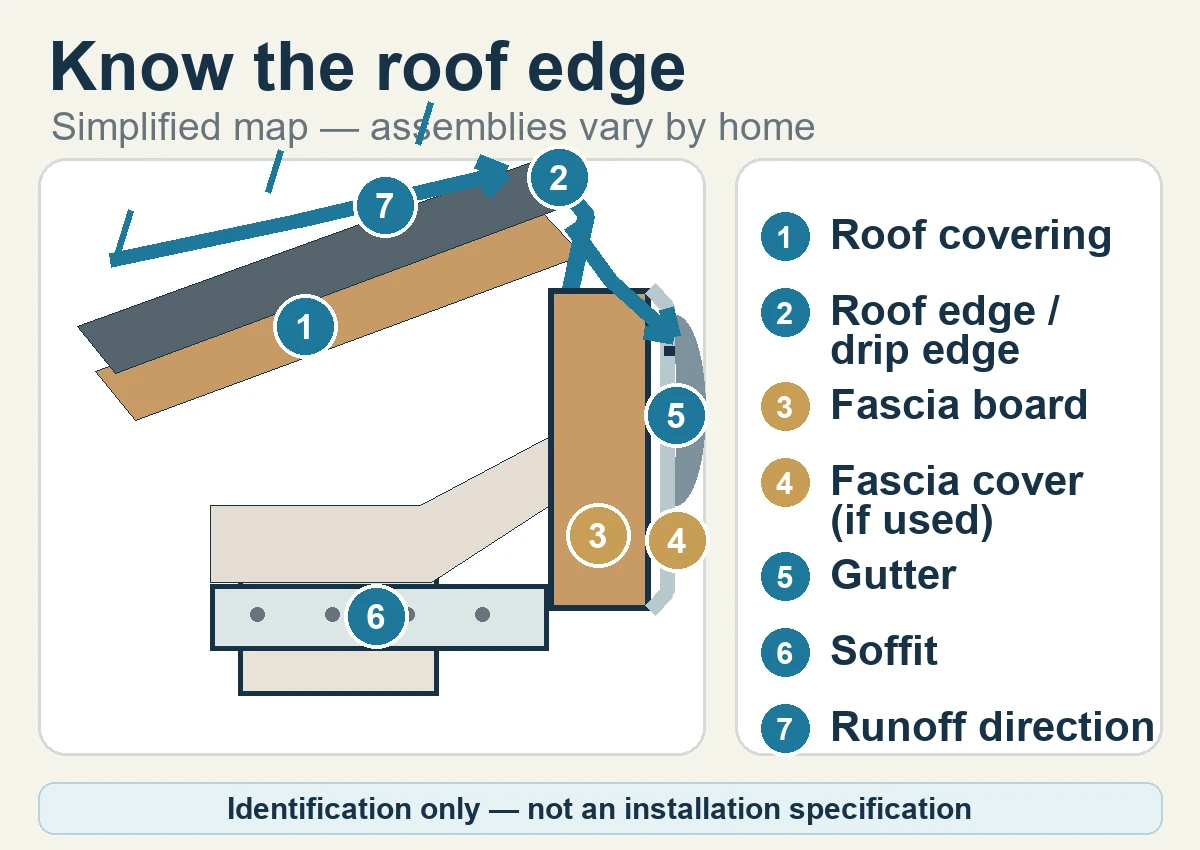
Fascia is the board, trim, or finishing element along a roof perimeter or eave. Depending on the house, it may cover the ends of roof framing, finish the roof edge, or provide a surface for gutter attachment. Materials and construction details vary, so fascia is not always wood and does not serve the same structural role on every home.
The Insurance Institute for Business & Home Safety roof-component guide distinguishes fascia from the roof deck, covering, drip edge, and underlayment. The roof deck is the sheathing beneath the roof system. Underlayment is a separate water-management layer between certain roof coverings and the deck.
Fascia Boards and Fascia Covers
A fascia board forms the underlying edge in many assemblies. Some homes also have a metal, vinyl, or other fascia cover over that board. The cover can provide a finished appearance and limit direct weather exposure, but it does not prove that the material behind it is dry or undamaged.
How Fascia Differs From Soffit
Fascia generally faces outward at the roof edge. By contrast, the soffit is the underside of an eave or overhang. Damage can occur in either area, yet a stain on the soffit and a stain on the fascia may come from different paths. Neither observation should be treated as a complete diagnosis.
How Fascia Relates to Gutters
Many gutter systems attach to fascia, although not every system uses the same fastening method. A gutter collects roof runoff and directs it toward downspouts. Fascia helps finish the edge beside that drainage path, while a drip edge is a distinct flashing component intended to help direct water at the roof perimeter.
How Water Affects Northern Virginia Fascia Damage
Rain should move from the roof covering toward the eave, into the gutter where one is present, and through the downspout system. Flashing, roof geometry, material laps, and drainage details help manage that path. The U.S. Department of Energy’s overview of a water-managed roof assembly explains why layered protection and drainage work together.
At the perimeter, a drip edge helps control dripping water and protect materials below. The DOE’s drip-edge guidance focuses on storm-resistant construction. Its specific installation details should not be treated as a universal specification for every existing Northern Virginia home.
When moisture repeatedly reaches fascia, repainting may improve appearance without resolving the cause. Therefore, repair planning should begin with the route of the water. Possible sources include gutter overflow, a leaking joint, displaced roof-edge metal, or another nearby condition.
Northern Virginia Fascia Damage Warning Signs
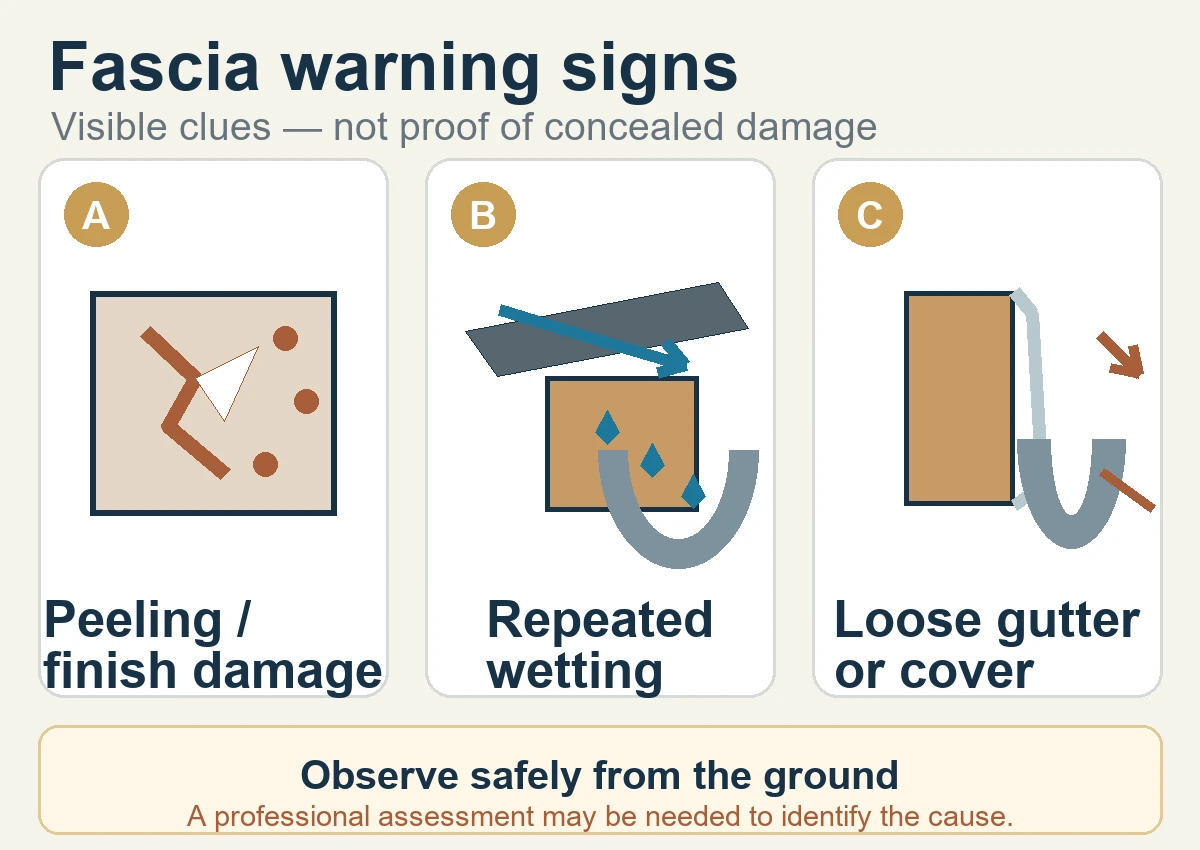
Ground-level observations can help a homeowner decide whether an assessment is appropriate. These clues show where to look more closely; they do not confirm hidden deterioration.
Peeling or Bubbling Paint
Paint that repeatedly peels, blisters, or loses adhesion may indicate weathering or moisture exposure. Still, a failed finish alone does not prove that the material underneath has decayed. Its location, pattern, and return after prior coating work provide useful context.
Discoloration and Water Stains
Dark marks, streaks, or stains beneath a roof edge may follow runoff. Compare the area during dry weather and after ordinary rain from a safe position. A stain can remain after a past event, so its presence does not prove that water is actively entering the house.
Cracking, Soft-Looking or Deteriorating Materials
Split edges, crumbling surfaces, warped sections, or a visibly uneven profile deserve attention. Do not probe questionable material from a ladder or pull at a loose panel. A professional can determine whether the concern is limited to a finish, a cover, an underlying board, or connected components.
Loose or Sagging Gutters
A gutter that has shifted, separated, or changed slope may not move runoff as intended. Movement may involve fasteners, accumulated weight, fascia condition, or several factors together. Review safe maintenance considerations in Novum’s Northern Virginia gutter maintenance guide.
Gaps or Loose Fascia Covers
Open seams, bent edges, or displaced cover sections may expose underlying materials. Some joints are intentional, so appearance alone is not enough to label every gap defective. Loose material near an entry, walkway, or electrical service line should be approached cautiously.
Common Sources of Northern Virginia Fascia Damage
Several conditions can contribute to Northern Virginia fascia damage, and more than one may be present. The visible pattern helps guide further investigation, but it does not identify an automatic cause.
Repeated Roof-Edge Wetting
Wind-driven rain, changing seasons, and property-specific roof shapes can wet different parts of an eave. Repeated exposure becomes more important when the material cannot drain or dry readily. A pattern limited to one corner may have a different cause from damage along an entire run.
Gutter Overflow or Leakage
Debris, inadequate flow, a leaking seam, or a poorly positioned outlet can allow water to pass over or behind a gutter. In addition, downspout restrictions can affect drainage upstream. Novum’s guide to downspout drainage warning signs explains how the outlet side of the system fits into broader water management.
Roof-Edge Flashing Problems
Missing, loose, deformed, or poorly integrated roof-edge metal may change the direction of runoff. IBHS flashing guidance describes flashing as a component that sheds or directs water, while noting that details differ by application. For a broader explanation, see Novum’s roof flashing planning guide.
Trapped Moisture and Poor Drying
Water can remain near concealed layers when covers, joints, or adjacent materials restrict drying. Surface sealing without understanding that path can hide a recurring issue. The EPA emphasizes controlling the moisture source, but a fascia stain by itself cannot diagnose indoor mold.
Northern Virginia Fascia Damage Versus Soffit
Fascia damage appears on the outward-facing roof-edge trim. Soffit damage appears beneath the overhang. Peeling finishes, staining, deformation, or loose panels can occur in both places, but their position matters when tracing water.
For example, a soffit stain may relate to runoff at the eave, a plumbing or interior moisture source, or another concealed condition. Meanwhile, a displaced fascia cover may be limited to exterior trim. The two areas should be evaluated together without assuming one always caused the other.
What Northern Virginia Fascia Damage Does Not Prove
A visible defect is evidence of a condition, not a complete diagnosis. Northern Virginia fascia damage does not automatically prove that:
- A roof leak has been confirmed.
- Rot has affected the roof deck.
- Complete roof replacement is necessary.
- Mold is present in the attic.
- Gutters are the only cause.
- Replacement is required along the full fascia run.
Concealed materials may be better or worse than the surface suggests. Consequently, recommendations should follow an assessment of the affected location, related drainage, material type, and safe access conditions.
Observing Northern Virginia Fascia Damage Safely
Start from the ground or another stable, permitted location. Take dated photos from consistent angles, then compare them over time. After ordinary rainfall, note recurring stains, overflow, gutter misalignment, or water reaching areas below the eave.
Avoid roof walking, unsupported ladder work, leaning from upper windows, or pulling on loose gutters. Do not stand beneath unstable trim or work near electrical service lines. Severe weather is also the wrong time to clear drainage or inspect a roof edge.
Northern Virginia Fascia Damage Repair Planning
Find the Moisture Source First
Begin by identifying when and where wetting occurs. Photos, weather observations, and maintenance history can help a qualified professional compare likely paths. Cleaning, repainting, or sealing a surface may not solve a concealed source.
Assess Material and Attachment
Next, determine whether the visible element is a board, cover, composite trim, or another material. Its attachment and condition affect the available repair options. Avoid assuming that one replacement product or fastening method suits every roof edge.
Review Related Gutter and Roof-Edge Details
Finally, consider the gutter, downspout path, drip edge, nearby roofing, and soffit as connected parts of the assessment. This review can show whether the repair should remain localized or include a related drainage detail. It can also prevent a cosmetic finish from hiding recurring wetting.
When Northern Virginia Fascia Damage Needs Assessment
A professional assessment of Northern Virginia fascia damage is reasonable when deterioration returns, the gutter sags significantly, attachments are loose, or visible wood appears decayed. It is also useful when roof-edge water recurs, concealed conditions are uncertain, or damage follows a storm.
IBHS survey guidance emphasizes documenting observed conditions and comparing them with prior information when available. Ask what was directly observed, what remains concealed, which components may be contributing, and how the proposed work addresses the moisture path.
Seasonal Northern Virginia Fascia Damage Checks
Seasonal changes, leaf debris, rainfall, and wind-driven weather can alter roof-edge conditions. A practical time to look from the ground is after leaves have fallen, after an ordinary rain, and after a significant storm once conditions are safe. There is no single inspection interval that fits every property.
Homes with mature landscaping near eaves may need closer observation of drainage. Likewise, roof geometry, gutter configuration, trim material, and prior repairs affect what homeowners see. Record changes instead of relying on memory.
Frequently Asked Questions
What Is the Difference Between Fascia and Soffit?
Fascia generally faces outward along the roof edge, while soffit covers the underside of an eave or overhang. They meet in many assemblies, but they are separate components and may show different damage patterns.
Can a Leaking Gutter Damage Fascia?
Yes, repeated overflow or leakage can wet nearby fascia. However, a gutter is only one possible contributor. Roof-edge flashing, roof geometry, joints, and concealed conditions may also need review.
Does Peeling Paint Always Mean the Fascia Is Rotten?
No. Peeling paint can result from aging, surface preparation, weather exposure, or moisture. An assessment is needed before concluding that the underlying material has decayed.
Does Damaged Fascia Require a Complete Roof Replacement?
No. The appropriate scope depends on the cause, extent, roof-edge construction, and condition of related materials. Localized damage does not automatically require replacement of the entire roof.
Final Thoughts
Understanding Northern Virginia fascia damage starts with the limits of a surface observation. Fascia sits beside several components that manage runoff, but its appearance alone cannot identify every hidden condition. The most useful repair plan separates the visible damage from its source, then considers gutters, flashing, soffits, and roof-edge materials together.
If recurring staining, loose components, or deterioration raises questions, review Novum Home Remodeling’s Northern Virginia roofing services and contact the team to discuss an assessment. A measured evaluation can clarify what is damaged and what work, if any, is appropriate.