
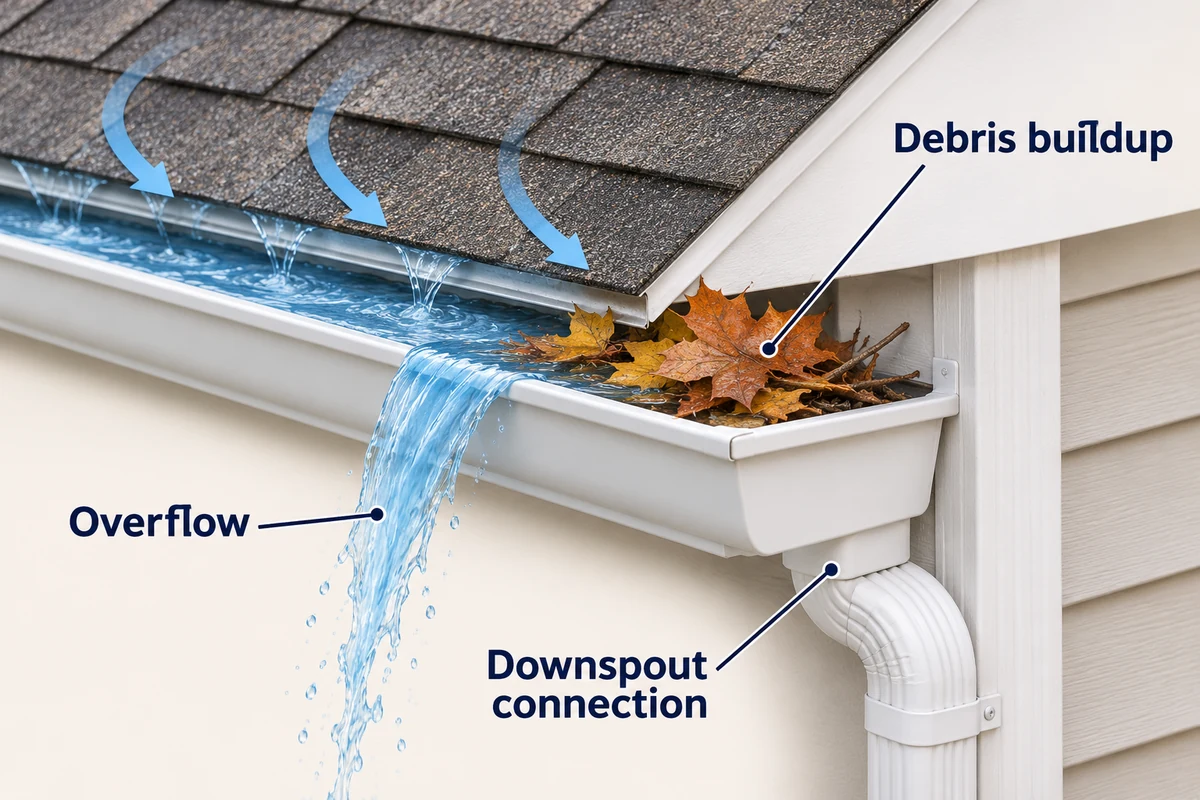
Northern Virginia gutter maintenance starts with a simple question: where does rainwater go after it leaves your roof? Gutters collect that runoff, while downspouts carry it toward a discharge point. Leaves, loose connections or a blocked outlet can interrupt the route.
This seasonal guide explains what to observe safely from the ground, what to record and when to seek professional help. Use it to plan upkeep around your property’s conditions. It cannot diagnose a leak or determine whether a particular gutter system needs replacement.
Why Northern Virginia Gutter Maintenance Matters
A wooded lot may collect more leaf debris than an open yard. Similarly, a house with several roof levels can have gutter runs that are difficult to see. Spring rain, summer storms, autumn leaves and winter freezing conditions provide useful reminders to check for changes.
However, no two properties have the same drainage pattern. A seasonal plan helps you notice recurring trouble without assuming every house needs identical work. Keep a short record of concerns, previous cleaning and repairs. That history gives a professional more useful information than a single photograph taken without context.
How Gutters and Downspouts Protect a Home
Gutters sit along the roof edge and collect water that would otherwise fall beside the building. Their outlets feed downspouts, which carry the water downward. From there, a suitable discharge route should direct it away from the home.
The PNNL guide to gutters and downspouts explains this roof-runoff role. Yet gutters are only one part of water management. Grading, roof details and drainage around the foundation also matter. Functioning gutters cannot guarantee that a basement or crawlspace will remain dry.
Follow the whole route when discussing a concern. For example, an open gutter does little good if a disconnected downspout empties beside the wall. Likewise, moving an outlet may not resolve a low area that collects water. Ask a qualified professional to assess the property before changing its drainage route.

Common Signs Your Gutters Need Attention
Start with visible changes rather than a diagnosis. Note where each symptom appears and whether it follows ordinary rain or an unusually heavy downpour. The same symptom can have more than one cause.
Overflow and Uneven Gutter Runs
Water spilling over the front edge may suggest debris, a restricted outlet or another flow problem. Also look for sagging sections, separation from the fascia or a downspout pulling away from its connections. Gutter slope and system capacity may need professional review if trouble continues after an obstruction is addressed.
Do not decide that overflow automatically calls for replacement. Instead, describe the location and conditions. A professional can check whether the issue involves upkeep, alignment, fasteners or the system’s suitability for the roof.
Leaks, Stains and Pooling Water
Visible drips at seams, rust on susceptible metals or other corrosion deserve attention. Stains beneath a gutter and soil erosion can also provide clues. However, a mark alone does not establish its source or show whether a leak is still active.
At ground level, note pooling near the foundation, entrances or planting beds. Fairfax County’s gutter and downspout drainage guidance connects wetness and erosion with gutter, discharge and grading concerns. If water enters the building, arrange prompt assessment rather than relying on this checklist.
Spring Gutter Maintenance in Northern Virginia
After winter, look for a gutter run that appears lower than before, a loose connection or a displaced downspout extension. Check visible outlets for debris when the ground is dry and safe. Also note any new staining along the fascia or exterior wall.
Compare those observations with your fall notes. Did a previously sound connection separate? Does water now collect where it did not before? These questions help you describe a change without guessing what caused it.
Then arrange any needed cleaning or inspection with someone equipped for the access conditions. Ask them to review the outlet and downspout, not just the visible gutter trough. Keep their findings with your maintenance record.
Summer Storm and Rainfall Checks
Observe rainfall only from a safe indoor location when possible. Never go outside to inspect gutters during lightning, high winds or severe weather. After conditions settle, ground-level checks can reveal displaced pieces, debris and changed drainage patterns.
For example, record whether overflow affects one corner or a whole gutter run. Note where discharged water travels and whether it crosses a walkway. Also distinguish a brief wet patch from water that remains well after rainfall.
The EPA’s guidance on changing outdoor conditions recommends keeping gutters and downspouts free of debris and leaks. It also emphasizes directing rainwater away from the home. Recurring pooling may require a broader drainage assessment.
Fall Northern Virginia Gutter Maintenance
Nearby trees make autumn a useful time to revisit the gutter system. However, leaf fall does not finish on the same day at every property. Look for visible accumulations and note which roof sections sit beneath branches.
If professional cleaning takes place while leaves are still falling, ask when another inspection would make sense. A recent cleaning does not prove that the outlets remain clear weeks later. Similarly, a clear view of one gutter section does not establish the condition of hidden runs.
Record the work completed and any concerns the provider identifies. Before freezing conditions arrive, discuss unresolved discharge problems or disconnected components. Planning ahead is safer than trying to address a high gutter during icy weather.
Winter Gutter and Downspout Concerns
Freezing weather can complicate an existing drainage problem. From a safe location, note visible ice near outlets or water that refreezes across a walking route. Keep away from hanging ice and areas beneath loose guttering.
Do not climb onto the roof or attempt to chip ice from elevated gutters. Instead, explain the location and symptoms to a qualified professional. If an outlet appears blocked, avoid assuming that the visible ice is the only obstruction.
Also remember that roof-edge ice can involve more than gutters. Heat loss and roof conditions may need separate attention. Gutter upkeep alone is not a guarantee against ice dams, leaks or winter moisture problems.
Planning Northern Virginia Gutter Maintenance Visits
There is no universal number of cleanings that suits every home. Nearby trees, storm debris, roof shape, previous blockages and the system’s condition should guide the plan. Seasonal reminders are starting points, not proof that everything remains clear between visits.
Ask your maintenance provider what they observed and why they recommend a particular interval. For instance, recurring debris at one outlet may justify closer monitoring there. Meanwhile, an inaccessible upper gutter may need professional inspection even when lower sections look clear.
Review the plan when circumstances change. A new drainage issue or repeated overflow deserves attention rather than waiting automatically for the next calendar reminder.
Gutter Guards: What Homeowners Should Know
Gutter guards can reduce entry of certain debris, but they do not eliminate every maintenance task. Designs handle leaves and smaller debris differently. Some covers can collect material on top or become displaced, so inspection still matters.
Before choosing a product, ask how it fits the existing gutter and how someone will access the system for cleaning. Also request its maintenance instructions. Consider nearby trees and actual debris rather than assuming one design is best for every house.
If guards are already present, tell the provider before arranging work. Their presence may change the inspection or cleaning scope. Avoid treating a covered gutter as evidence that its outlet and downspout are clear.
When Gutters Need Repair or Replacement
Routine maintenance deals with debris and ongoing checks. Repair addresses a specific defect, such as a loose connection, damaged section or leaking seam, when the remaining system is suitable. Replacement deserves consideration when damage is widespread or recurring problems require a different solution.
Ask what the assessment actually found and which work addresses it. Also clarify what will remain in place. A cleaning quote, a repair proposal and a new-system proposal should not be treated as interchangeable.
Novum’s gutter installation and drainage planning services describe installation, downspout and gutter-protection options. Review that scope if you are considering a gutter project. Confirm the specific work offered rather than assuming routine cleaning is included.
Gutter Maintenance Safety and Professional Inspections
Keep homeowner observations at ground level or through a safe indoor view. Use photos only when you can take them without entering a hazardous area. Never climb onto a roof to complete this checklist.
The CDC/NIOSH ladder safety guidance identifies risks including poor equipment condition and overreaching. Multi-story gutters, awkward roof shapes, electrical lines and unstable access call for qualified help. Do not turn a quick visual check into an improvised ladder task.
Before arranging work, explain the access conditions and request a clear written scope. Ask whether the visit includes the gutter trough, outlets, downspouts and discharge points. Share recurring symptoms and request findings you can keep for future comparison.
Northern Virginia Gutter Maintenance Checklist
Use these ground-level observations as a record, not a test that certifies the system’s condition. Leave anything you cannot inspect safely for a qualified professional.
- Look for visible debris near gutter openings.
- Note sagging or separation from the fascia.
- Watch for overflow only from a safe location.
- Check whether visible downspout connections appear intact.
- Record leaks, stains or visible corrosion.
- Look for water pooling near the house.
- Examine splash blocks or extensions from ground level.
- Note erosion around discharge points.
- Look for visible obstructions at drainage outlets.
- Record recurring issues and the rainfall conditions.
- Arrange professional assessment when needed or when access is unsafe.
Final Thoughts
A useful Northern Virginia gutter maintenance plan follows the water and responds to what changes. Observe safely, keep clear notes and address recurring concerns with qualified help. Above all, consider the full drainage route rather than treating a clean gutter as a complete solution to every moisture problem.
3 Responses