
Northern Virginia gutter guards can appeal to homeowners who see leaves collecting along the roof edge. Yet a cover that catches leaves must also admit rainwater and allow future upkeep. The useful question is not whether a guard promises fewer chores. It is whether that design suits your roof, debris and existing drainage system.
This guide compares common approaches and their limits. It also explains what to ask before choosing a system, without assuming every home needs one. Start with the cause of your gutter problem, then consider whether a guard could help.
What Are Northern Virginia Gutter Guards?
Gutter guards are screens, covers or inserts intended to limit certain debris entering rain gutters. They do not form a sealed lid. Instead, each design provides a route for water while attempting to intercept or shed unwanted material.
The regional name does not describe a special product standard. For Northern Virginia gutter guards, the right questions concern the individual house: nearby trees, roof shape, water flow and access for service.
How Gutter Guards Work in Northern Virginia
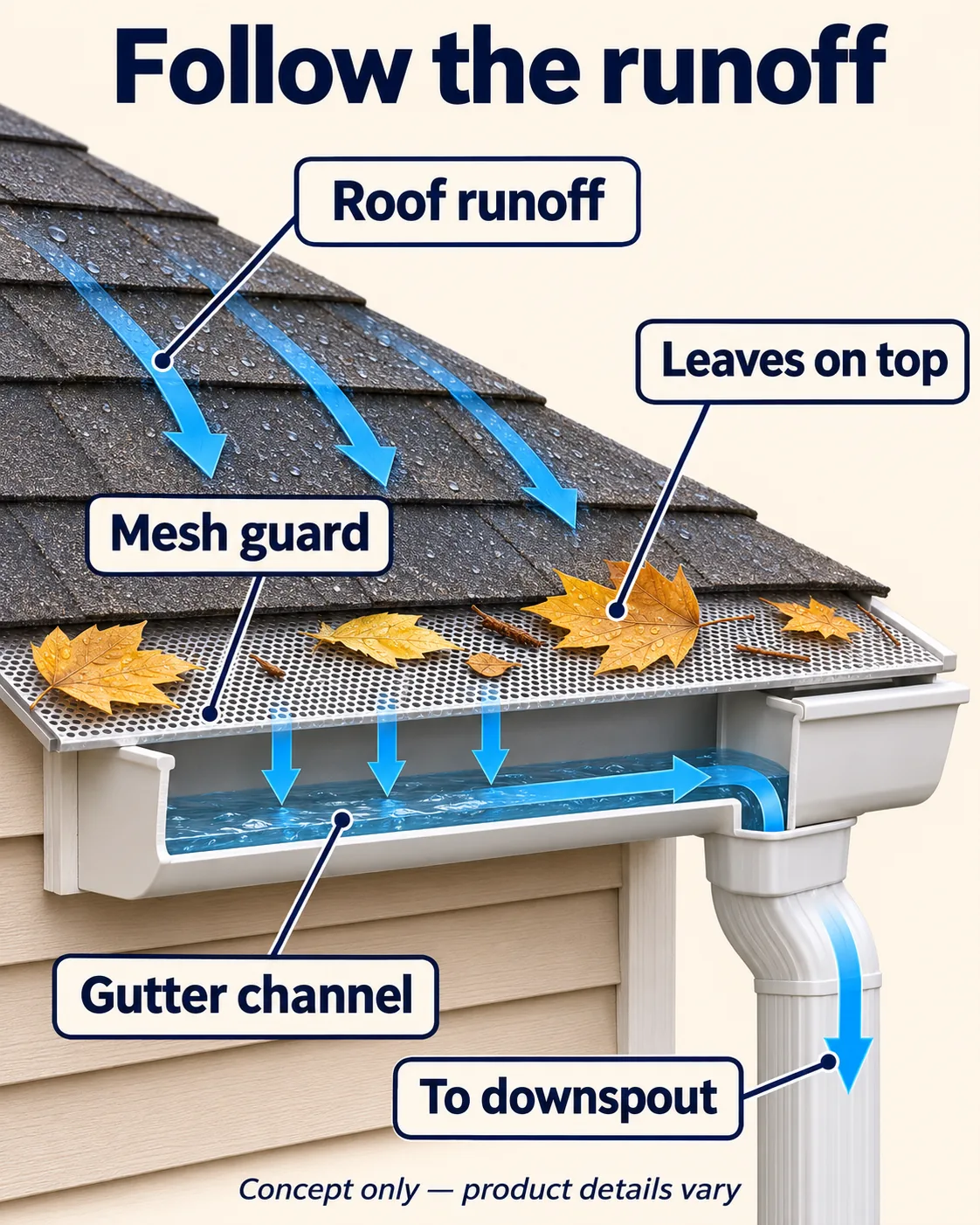
Rain runs down the roof toward the eave. A screen admits water through openings; a solid cover guides it toward an entry slot. Once inside, water travels along the gutter channel to an outlet and downspout.
The Department of Energy’s roof-runoff guidance explains why gutters and downspouts must carry water away from the building. A guard changes how water enters that system. It does not replace the system itself.
Benefits of Gutter Guards for Northern Virginia Homes
A suitable guard may reduce the amount of broad leaves entering the trough. As a result, it may limit some debris-related blockages or make certain service tasks simpler. However, those benefits depend on the design and conditions.
For example, a screen may keep large leaves above the gutter while fine particles still collect nearby. Compare the expected change in maintenance, rather than treating less debris as proof of maintenance-free performance.
Comparing Gutter Guards for Northern Virginia Homes
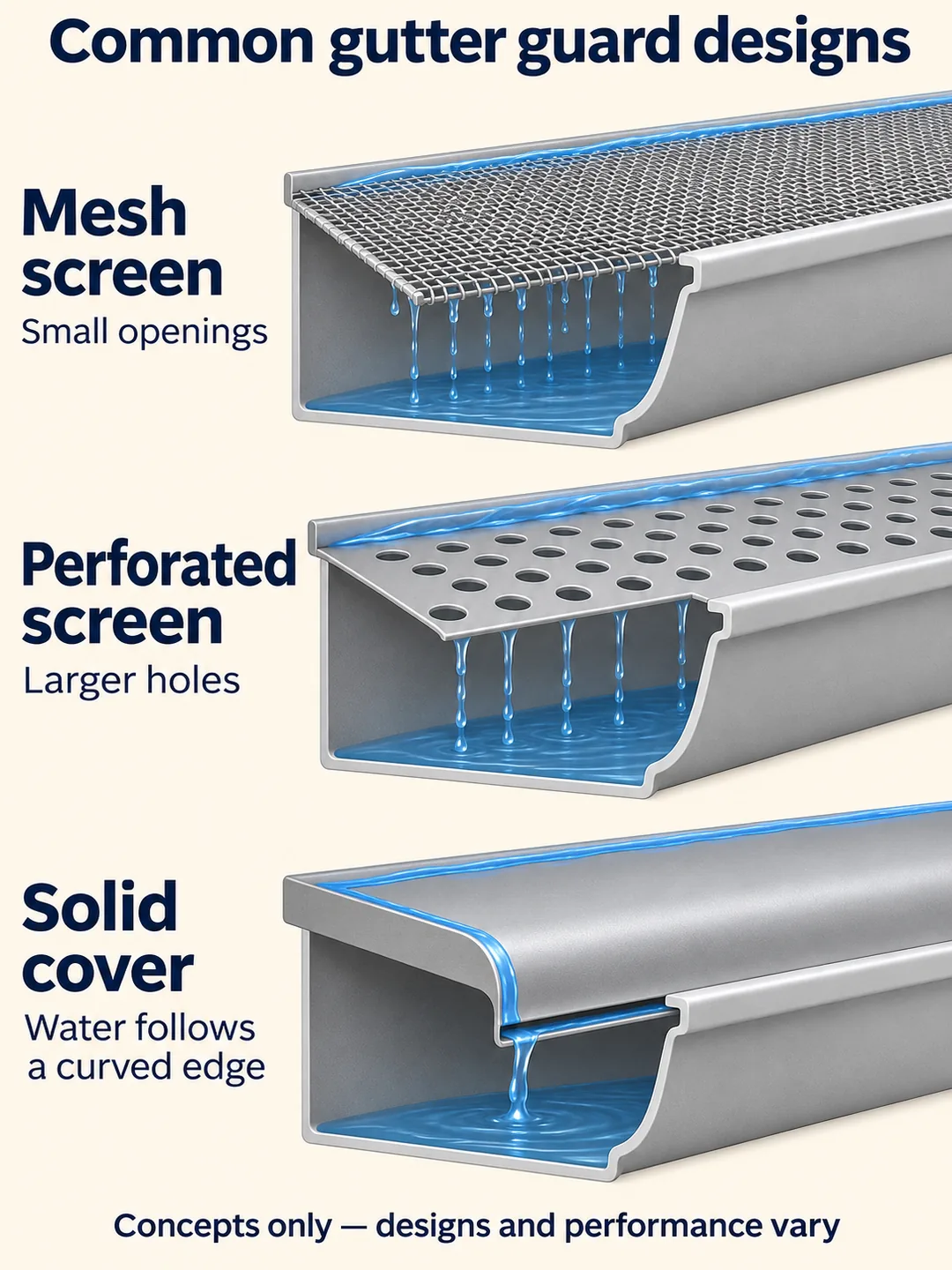
These categories describe common designs, but some products combine features. Opening size, materials and attachment details vary within each group. Therefore, review the actual proposed product rather than judging it by its category alone.
Mesh and Micro-Mesh Screens
Mesh uses small openings to admit water while intercepting some debris. Finer mesh may exclude smaller material, but pollen, sediment or wet leaves can collect on its surface. Ask how the product handles buildup and how a professional reaches it for cleaning.
Perforated Screens
These screens use holes or slots to let water through. They may stop larger leaves, while smaller particles pass through or lodge in openings. Also compare the material’s durability, fit and resistance to movement.
Solid-Cover Systems
A solid cover typically guides water around a curved edge toward a slot. This approach aims to shed debris while capturing runoff. However, water capture depends on the product, fit and flow conditions; intense or concentrated runoff may bypass some systems.
Foam and Brush Inserts
Foam or bristle inserts sit inside compatible gutters. Water moves through or around the insert while some debris stays near the top. Nevertheless, fine material and organic buildup may collect within it. Ask whether service requires removal and how the product affects access to outlets.
| Guard type | Potential benefit | Key limit |
|---|---|---|
| Mesh | May filter smaller debris | Surface buildup |
| Screen with holes | May intercept larger leaves | Fine debris can pass |
| Solid cover | May shed debris | Water can bypass |
| Foam insert | May hold leaves above flow | Material can collect inside |
| Brush insert | May interrupt debris entry | Debris can lodge in bristles |
What Gutter Guards Cannot Prevent
Guards do not automatically fix loose joints, broken brackets, damaged fascia or poor gutter slope. Nor do they correct undersized gutters, blocked downspouts, faulty flashing or poor site grading. Covering a damaged system can leave the original problem unresolved.
Likewise, no guard guarantees protection from every leak, clog or foundation moisture problem. Identify existing damage and obstructions before approving an addition. Otherwise, a new cover may simply conceal a problem that still needs attention.
How Heavy Rain Affects Gutter Guard Performance
Water Flow and Roof Valleys
Roof valleys can deliver concentrated runoff to a short gutter section. During intense rain, water may overshoot an opening or cover. Roof pitch, gutter alignment and capacity also matter, so a qualified assessment should follow the whole runoff path.
Debris Buildup on Guard Surfaces
Even when the trough looks clear, material above it may restrict entry. For instance, a layer of wet leaves can cover screen openings. Ask how the proposed system handles this condition rather than assuming all screens overflow or all covers capture every downpour.
Leaves, Pine Needles, and Fine Debris
Broad leaves, small leaves, pine needles and seed pods present different shapes and sizes. Pollen, roof granules and fine sediment create another set of challenges. Depending on the design, material may rest on top, lodge in openings or reach the gutter outlet.
Therefore, describe the debris you actually notice around your house. A neighbor’s experience may be useful, but different trees and roof geometry can produce different results.
Northern Virginia Gutter Guards Still Need Maintenance
Guards change maintenance; they do not erase it. Professional checks may still need to address surface debris, blocked outlets, downspouts, loose fasteners and displaced sections. Organic buildup and storm damage can also affect performance.
Base observation and service plans on product instructions, nearby vegetation, weather and past problems. There is no single interval suitable for every house. For the broader upkeep routine, see our seasonal gutter maintenance guide.
Gutter Guards, Downspouts, and Foundation Drainage
Follow the sequence: roof, guard and gutter, outlet, downspout, then an appropriate discharge point away from the building. A blockage at any stage can undermine drainage. In particular, a guard does not make the downspout blockage-proof.
Repeated pooling near a foundation deserves assessment of discharge and site conditions. The EPA’s moisture guidance emphasizes controlling water sources. A new gutter cover alone cannot establish that a moisture problem is solved. Discharge arrangements must suit the property and applicable requirements.
Roof-Edge Compatibility and Installation Questions
Before choosing a guard, ask how it fits the gutter attachment, fascia and roof edge. Drip edges and flashing must retain their intended function. Some systems interact with shingles, but that does not make lifting or fastening through roofing universally acceptable.
At roof-wall junctions, DOE guidance on kick-out flashing explains how a diverter directs water toward the gutter. A guard should not defeat that drainage detail. Request product-specific instructions and confirm any roof, gutter and product warranty implications before work begins.
Northern Virginia Seasons and Gutter Guards
Compare Northern Virginia gutter guards against your home’s actual seasonal conditions. Falling leaves, spring pollen, wind-blown material and freezing weather may each affect observations. However, an exposed roof and a sheltered, tree-lined roof can face different debris patterns.
Keep notes from safe locations about where water spills and when it happens. This gives an assessor more useful information than a general claim that a particular guard suits every local home.
Do Gutter Guards Prevent Ice Dams?
No guard provides universal ice-dam prevention. Snow, heat loss, roof temperatures and melting followed by refreezing can contribute to ice dams. The National Weather Service’s ice-dam overview describes these winter conditions. Ice can affect gutters with or without covers.
For safe context, read our ice-dam causes and warning signs guide. Do not climb up to remove roof ice or frozen gutter parts. Seek qualified advice about the underlying conditions.
When to Request a Professional Gutter Assessment
From a safe location, look for repeated spills, water falling near walls, sagging sections, shifted covers or recurring siding stains. Pooling and poor downspout discharge also warrant attention. However, these signs do not identify one cause: debris, fit, slope, capacity or an obstruction may be involved.
Seek qualified help when overflow persists after service, gutters pull away or roof-edge details appear disturbed. Avoid the area beneath loose parts and stay clear of electrical hazards. Leave elevated inspection and cleaning to qualified professionals; do not lean from windows or access roofs for this task.
If you need to discuss existing gutter concerns, explore Novum’s published gutter services. Confirm the scope available for your home rather than assuming a particular guard product or installation service.
Questions to Ask Before Choosing Gutter Guards
Ask which design is proposed and why it fits your gutter, roof runoff and debris. Request a written scope covering attachment, existing repairs, outlet checks and any roof-edge changes. Also clarify who handles cleaning, future access and service calls.
Compare product and workmanship warranties separately. What do they cover, and what exclusions apply? Does the proposal address recurring overflow? A clear explanation of limits is more useful than an unsupported promise that cleaning will never be necessary.
Northern Virginia Gutter Guards Checklist
- Identify the problem and note overflow from a safe location.
- Have existing gutter, outlet and downspout condition assessed.
- Describe nearby debris and concentrated roof runoff.
- Ask how the design handles heavy rain and surface buildup.
- Confirm roof-edge compatibility and any warranty implications.
- Understand which debris may remain and how service access works.
- Compare written scopes, maintenance duties and warranty exclusions.
- Avoid unsafe access and seek qualified help for elevated work.
Final Thoughts
Northern Virginia gutter guards can be worth evaluating when debris contributes to gutter problems. Still, the decision should account for water capture, compatibility and ongoing care. Start with a sound drainage system, compare realistic limits and choose a maintenance plan you understand.
Want to learn more about protecting your home from drainage problems? Explore our gutter installation and maintenance guides for Northern Virginia homeowners, including tips on gutter cleaning, repairs, replacement, and water management.