
Northern Virginia storm damage can leave obvious changes outside a house, but some concerns stay out of sight. Wind, hail, heavy rain and falling limbs can affect roofs, siding, gutters and exterior openings. However, a mark or leak alone cannot establish what happened or how much repair is needed.
This checklist explains safe observation, documentation and follow-up after severe weather. First, protect people. Then, gather information only where conditions allow. Ground-level observations do not replace a qualified inspection, and this guide cannot determine insurance coverage.
Northern Virginia Storm Damage: What to Do First
Wait Until Conditions Are Safe
Wait until the immediate weather threat has passed before considering any property check. Continue following local alerts because another storm may approach. Also, follow evacuation orders and restrictions on returning home. The National Weather Service’s post-storm guidance emphasizes continued awareness and staying out of damaged buildings.
Do not climb onto a roof or use a ladder to investigate damage. Likewise, stay out from beneath damaged or unstable tree limbs. A better photograph is never worth entering an unsafe area.
Keep Clear of Electrical and Structural Hazards
If there is an immediate threat to life, serious injury, fire, suspected gas leak or another emergency, contact emergency services from a safe location. Remain well away from downed power lines. Never touch them or any branch, fence or object contacting them; notify the utility or local emergency authorities.
Do not enter visibly unstable structures, walk through floodwater or approach suspected electrical hazards. Keep children and pets away from hanging debris and broken glass. In addition, do not attempt roof tarping, large fallen-tree removal or structural-debris removal yourself. Qualified responders must address dangerous conditions before routine assessment begins.
Signs of Storm Damage Around Your Home
When safe access is possible, note changes from a stable ground-level location. Northern Virginia properties differ in tree cover, exposure and exterior condition. Therefore, a neighbor’s damage does not prove that your house has the same problem.
Roof Shingles, Flashing and Edges
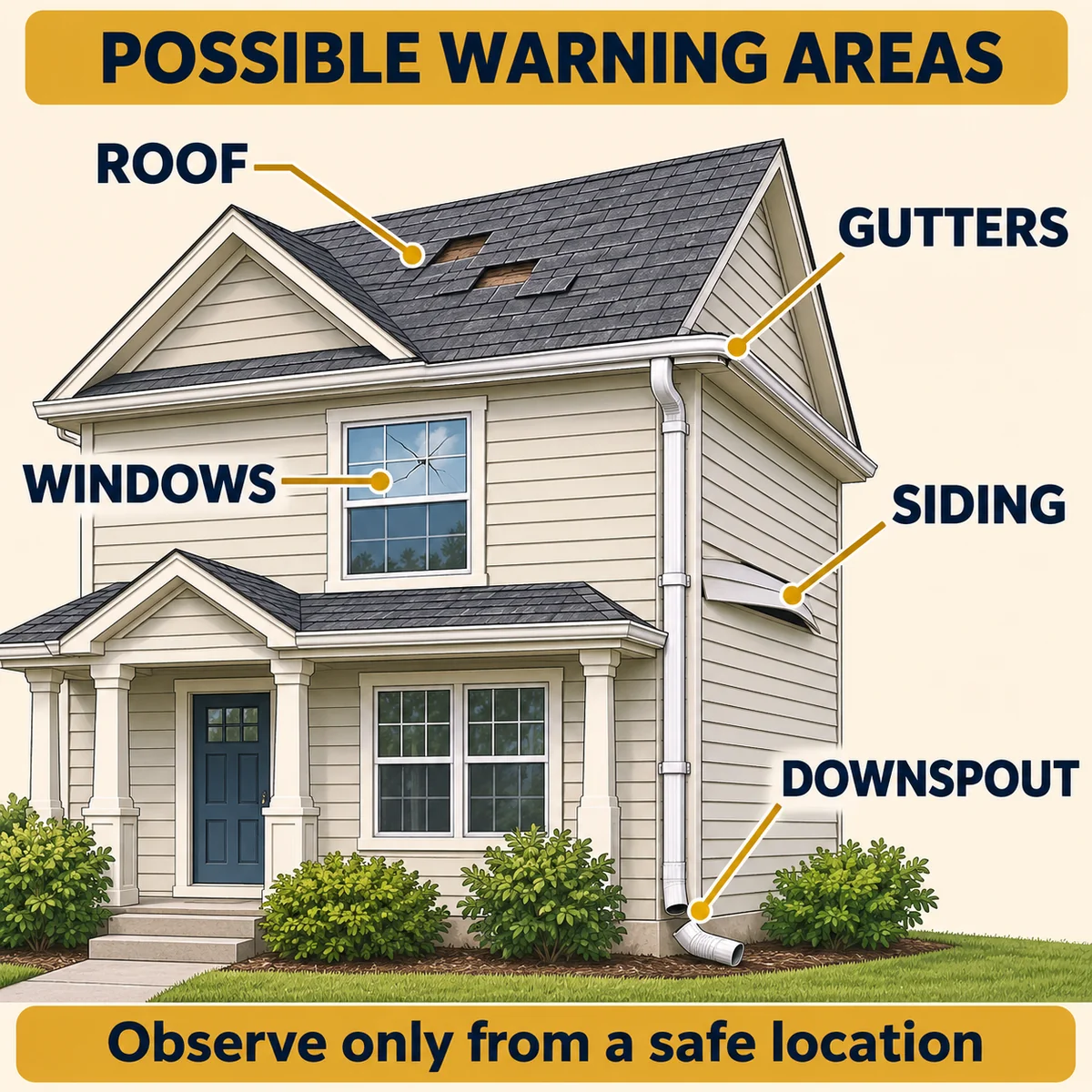
Possible concerns include missing shingles, displaced roof sections, visibly disturbed flashing and debris resting on the roof. Fallen limbs may also affect supporting parts below the covering. However, distance can hide damage or make ordinary shadows look like gaps. Do not lift, scrape or probe materials to investigate.
Siding, Gutters, Windows and Doors
Look for loose siding panels, cracks, damaged trim and new openings. Similarly, sagging gutters, dents, separated downspouts or water escaping at damaged connections deserve attention. These observations identify areas to discuss; they do not establish concealed wall damage or the cause of a dent.
From a safe position, note cracked glass, damaged frames, loose trim or water around windows and exterior doors. A newly sticking door may also warrant assessment. However, sticking alone does not prove a storm caused the problem. Do not force damaged openings or handle loose glass.
| Area | Possible concern | Safe next step |
|---|---|---|
| Roof | Missing material | Note from the ground |
| Siding | Loose panels | Keep clear; request review |
| Gutters | Detached section | Avoid the area below |
| Openings | Broken glass | Keep people away |
| Trees | Unstable limbs or wire contact | Stay away; call utility or 911 |
How Wind, Hail and Fallen Trees Can Affect a Home
Wind can displace or remove exterior components, leaving routes for rain. Meanwhile, hail can mark roofing, siding or metal surfaces. Cosmetic changes and functional damage are different: a dent does not automatically mean a component needs replacement.
The IBHS research on weathering and hazard exposure explains why material condition matters. Product type, age, weathering, existing defects and impact characteristics can affect damage patterns. Consequently, granules, spots or dents in a photograph cannot reliably establish hail damage or its extent.
Tree contact can affect both exterior finishes and structural components. Also, branches may conceal electrical hazards. Leave heavy debris in place until appropriately qualified professionals can address it safely. Do not assume that removing a limb makes the underlying structure safe.
Northern Virginia Storm Damage You May Not See
A roof can look unchanged from the driveway while a detail around an opening needs attention. Wind-driven rain may reach concealed areas, and an interior stain may appear later. Conversely, a stain could reflect an older leak. The timing is useful evidence, but it is not a diagnosis.
Check for new stains or dripping only in safe, normally accessible rooms. Do not enter a hazardous attic or stand beneath a sagging ceiling. Instead, report where and when you noticed moisture. Professional assessment can help distinguish visible symptoms from the underlying condition.
Documenting Northern Virginia Storm Damage Safely
Start a simple record for your Northern Virginia storm damage concerns. Note the event date, when you first noticed each change and which part of the house it affects. For example, write “water stain beside upstairs window” rather than guessing that hail caused a roof leak.
From safe locations, take a wider photograph that identifies the area, followed by a closer view only if safe. Keep the original files. Also, record affected rooms without entering damaged spaces. If access is unsafe, explain that limitation instead of seeking another angle.
Store photos, earlier maintenance records, estimates and receipts together. Record the date and substance of insurer conversations, including any instructions. The Virginia SCC’s disaster-loss guide supports organized records and communication with your insurer. Documentation helps explain observations; it does not guarantee claim eligibility.
When to Contact Your Insurance Company
Contact your insurer or agent promptly after discovering possible covered damage, once you can do so safely. Review your actual policy and follow the company’s instructions. When practical, ask what records it needs before extensive permanent repairs. However, do not delay emergency help or necessary protective action.
Coverage depends on the policy, cause of loss, exclusions, deductibles, endorsements and applicable conditions. The Virginia SCC’s homeowners insurance guide explains that policies do not cover every cause of loss. In particular, do not assume ordinary homeowners insurance covers flooding.
Ask about the requirements and deadlines that apply to your situation rather than relying on a general online timeline. A contractor’s estimate cannot guarantee approval, a waived deductible or a new roof. These are educational pointers, not a determination of coverage.
Temporary Protection and Preventing Further Damage
Necessary temporary protection may help limit further damage, but dangerous work belongs with qualified professionals. For example, roof tarping and work near broken glass require appropriate expertise and access. Do not climb, cut trees or disturb structural debris to protect belongings.
Keep receipts and records of protective measures, including who performed the work and when. Where safe, retain photographs of conditions before and afterward. Also, ask your insurer how to handle damaged items before disposal. Hazardous access is never required just to preserve evidence.
Planning a Northern Virginia Storm Damage Assessment
Request qualified assessment for water intrusion, loose roof materials, exterior openings, significant siding damage or broken windows. Large tree impacts, repeated leaks and uncertain structural conditions also need appropriate professional attention. However, emergency responders take priority when there is immediate danger.
Share observations and access limits when arranging a visit. Ask what the assessment includes, which areas need another specialist and whether any conditions prevent a complete review. This helps separate confirmed findings from areas that remain uncertain.
Novum’s storm damage assessment and repair-planning services cover exterior concerns described on its published service page. Contact the team to discuss scope and availability. Do not treat a consultation request as emergency dispatch or insurance-claim approval.
Questions to Ask Before Approving Repairs
Compare written proposals for the same work, rather than comparing totals alone. Ask each contractor to identify the affected areas, proposed materials and repair approach. Also, ask how the proposal handles conditions that cannot be confirmed until work begins.
- What relevant license information and insurance documentation can I verify?
- Which work, materials, cleanup and exclusions does the price include?
- What timing, payment conditions and warranty terms apply?
- Who checks local permit requirements, and how will changes receive written approval?
Requirements vary with the property and project, so confirm applicable local rules. After assessment, the separate roof repair versus replacement guide can help you consider repair options. It does not replace findings about your particular roof.
Avoiding Post-Storm Repair Scams
The FTC’s disaster-repair scam guidance recommends checking contractors carefully and reviewing written agreements. An unsolicited visit alone does not establish fraud. However, pressure to sign immediately, blank contracts or refusal to provide a written scope are reasons to pause.
Be cautious about demands for large unexpected upfront payments, insurance-check handovers or guaranteed coverage. Likewise, requests for gift cards, cryptocurrency or wire transfers deserve scrutiny. Verify credentials independently and avoid paying the full project cost before completion.
Northern Virginia Storm Damage Checklist
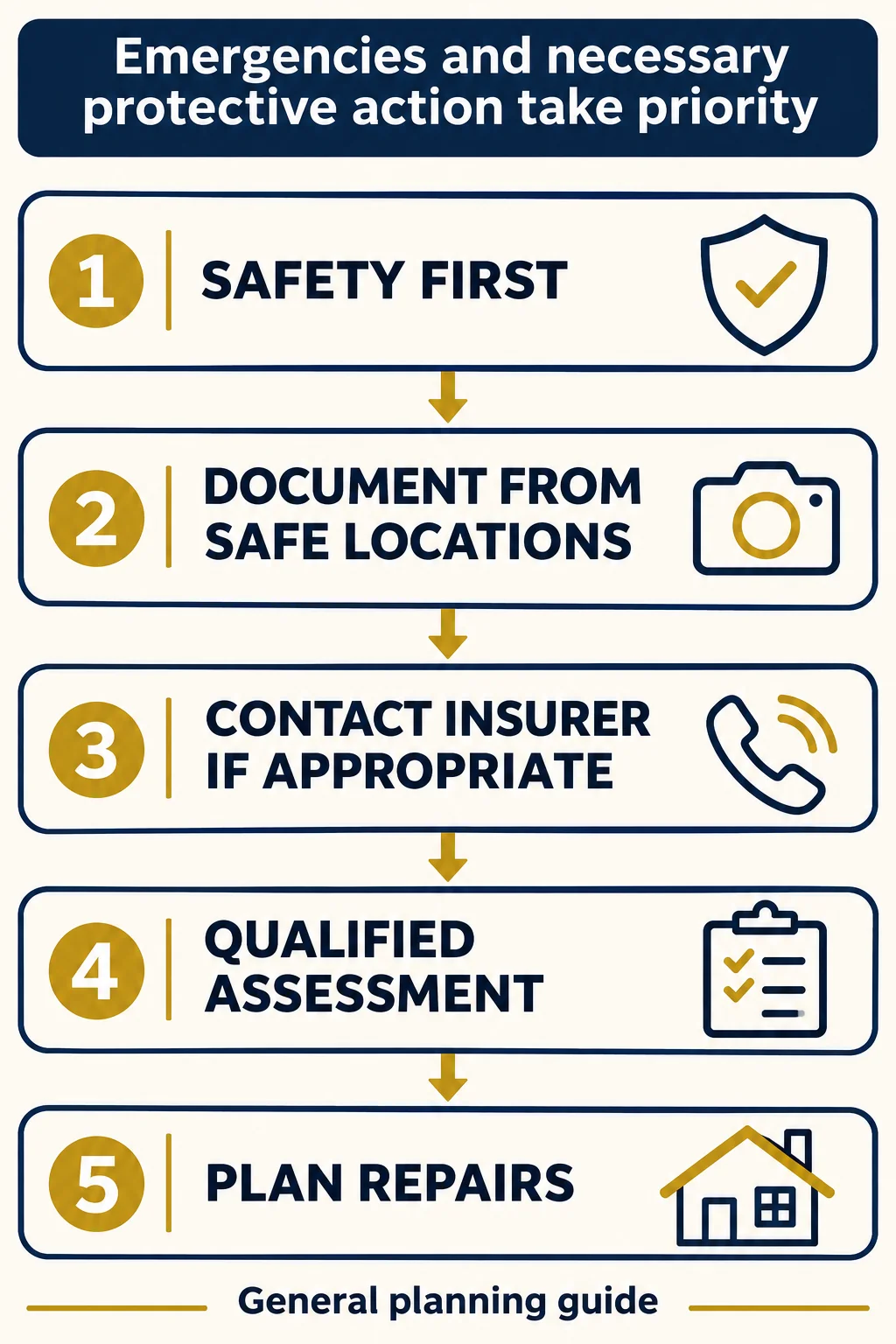
Use this sequence to keep follow-up organized. Emergencies and necessary protective measures always take priority over paperwork.
- Confirm the immediate weather threat has passed and follow local safety directions.
- Keep away from power lines, unstable trees, damaged buildings and floodwater.
- Observe exterior concerns only from safe ground-level locations.
- Record dates and observations without guessing the cause.
- Photograph visible concerns and safe interior areas when practical.
- Contact your insurer or agent as appropriate and retain its instructions.
- Save receipts for necessary professional protective work.
- Arrange qualified assessment and compare written permanent-repair scopes.
- Keep photos, estimates and correspondence together for follow-up.
Final Thoughts
Responding to Northern Virginia storm damage starts with safety, followed by careful records and qualified advice. You do not need to identify every defect yourself. Instead, explain what changed, preserve useful information and seek the right help before making repair decisions.
2 Responses