
Northern Virginia door maintenance starts with noticing how an entry works, not deciding immediately to replace it. A comfortable, dependable doorway needs more than an attractive finish. Its seals, hardware and surrounding opening also affect everyday use.
This guide explains what homeowners can observe safely, how air leaks differ from water problems, and when professional assessment makes sense. Keep your door’s care instructions nearby, because seals, finishes and drainage details vary by product.
Why Northern Virginia Door Maintenance Matters
Exterior doors experience frequent movement as well as changing weather. Rain, humid summers, cold spells and sun exposure can influence what you notice. For example, a shaded entrance may stay damp longer than an exposed sunny doorway.
Regular observation helps separate an isolated worn part from a recurring problem. However, a draft does not prove the entire door needs replacement. Likewise, staining near an opening calls for investigation before anyone promises that new weatherstripping will solve it.
Start With a Safe Exterior Door Check
What to Observe Around the Frame
First, look from a stable, accessible position without dismantling anything. Notice the gaps around the closed slab, which is the moving door panel. Then look at the frame, surrounding trim, visible seals and bottom threshold.
Record where a symptom occurs and whether it changes with rain, temperature or use. Photos taken from the same position can help explain a concern. Also note damaged glass, loose handles or visible coating damage without touching unsafe parts.
When a Door Problem Needs Prompt Attention
A door that cannot reliably lock or open for safe exit deserves prompt qualified attention. Do not force it or disable its security components. If water reaches electrical equipment, keep clear and seek appropriate professional assistance.
Similarly, leave heavy doors, broken glass and suspected hazardous materials undisturbed. Routine observation should not involve ladders, removing hinges or taking off trim.
Northern Virginia Door Maintenance: Seals and Drafts
Signs of Worn Perimeter Seals
Weatherstripping helps close the moving joint between the door and frame. Look for cracked, flattened, missing or loose sections. Daylight where the closed edges should seal can also flag a gap, although it does not explain the cause.
The DOE exterior-door weatherstripping guide emphasizes seal contact and checking door operation. A replacement seal needs a compatible profile and fit. Simply choosing a thicker strip can prevent proper closing or latching.
Why Not Every Draft Comes From Weatherstripping
Air can also move through gaps around the installed frame or adjacent wall. Those concealed joints differ from the door’s perimeter seals. Therefore, recurring drafts may need a professional air-leak assessment rather than repeated seal replacement.
For a basic check, observe visible gaps and light around a safely closed door. Keep the inspection non-invasive; do not remove trim or use smoke or powders. Northern Virginia door maintenance should preserve safe operation while identifying the actual leakage path.
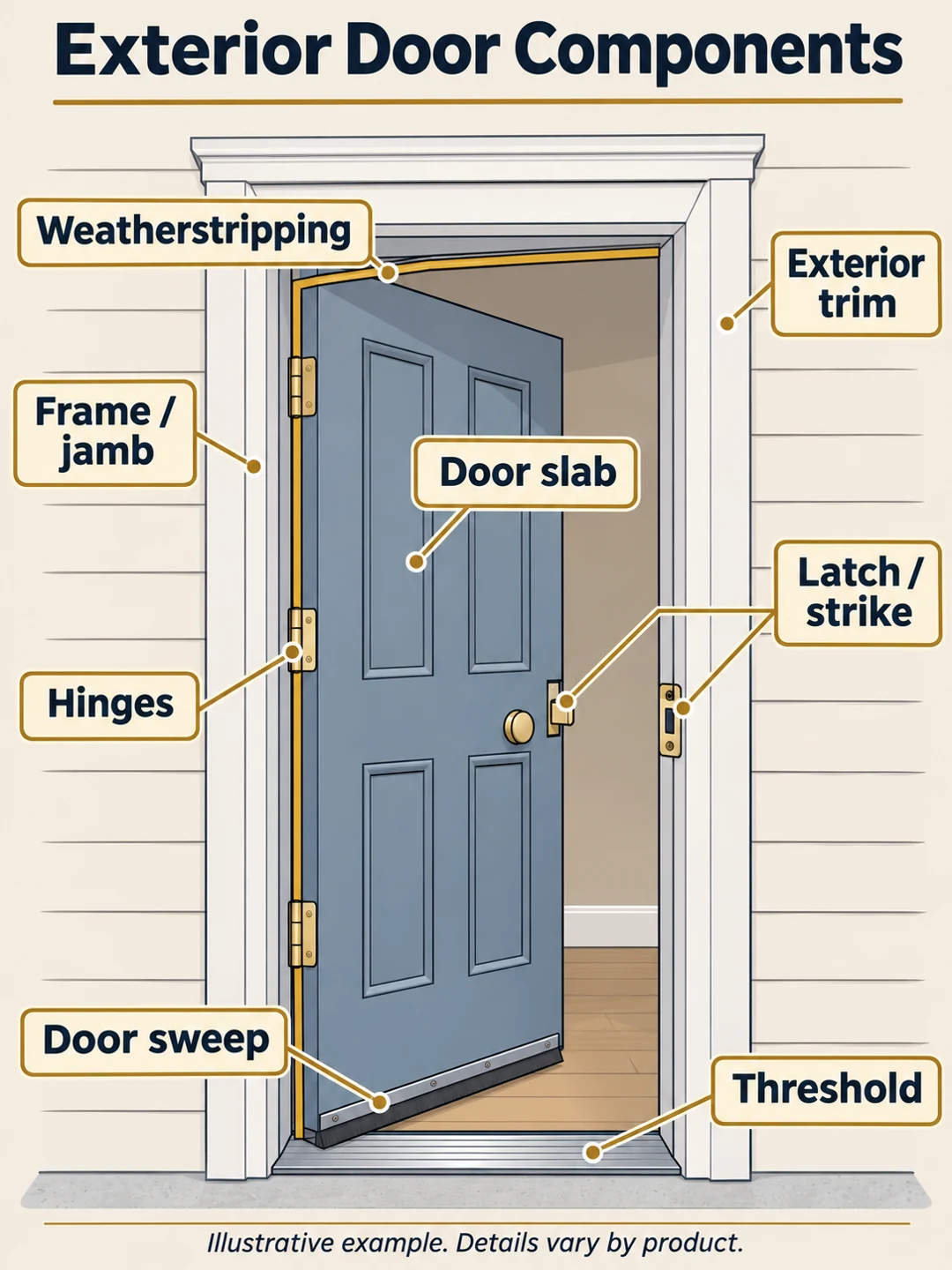
In the illustration, the slab moves within the frame, while exterior trim finishes the surrounding opening. Hinges support the slab, and the latch meets the strike on the opposite jamb. Perimeter weatherstripping, the bottom sweep and the threshold serve different positions.
Door Sweeps and Thresholds
A sweep seals along the bottom of some door designs. In contrast, the threshold is the stationary lower assembly beneath the door. It may include adjustable parts, gaskets or drainage features, depending on the product.
Check accessible areas for visible wear or debris without altering the assembly. However, avoid cutting or drilling the threshold, blocking drainage openings or removing an accessible transition. If the door scrapes or the bottom seal fails, ask which component needs attention.
Moisture Checks for Northern Virginia Door Maintenance
Water Stains and Damaged Trim
Water marks, peeling finishes and changing trim condition deserve careful notes. Record whether moisture follows wind-driven rain, ordinary rain or another pattern. A stain alone does not prove that the door slab is defective.
Also observe nearby siding and accessible wall surfaces. Our siding maintenance guide explains related exterior warning signs. Shared symptoms may help a professional assess the surrounding opening instead of treating each mark separately.
Possible Flashing and Drainage Concerns
Repeated moisture can involve the threshold, frame joints, flashing or surrounding wall. Flashing directs water across vulnerable connections; it is not interchangeable with weatherstripping. Consequently, adding caulk everywhere may hide symptoms or obstruct an intended drainage route.
Ask for an assessment of recurring leaks before approving cosmetic repairs. Do not pry off trim or probe hidden areas yourself.
How Exterior Door Openings Manage Water
A doorway interrupts the wall’s water-management layers. The frame, sill, flashing, water-resistive barrier and cladding therefore need coordinated connections. The barrier behind cladding helps manage water that passes the outer surface.
The DOE guidance on flashed door openings explains the importance of directing water outward. In some assemblies, sill-pan flashing helps provide that route. Meanwhile, air sealing addresses a separate leakage path around the frame.
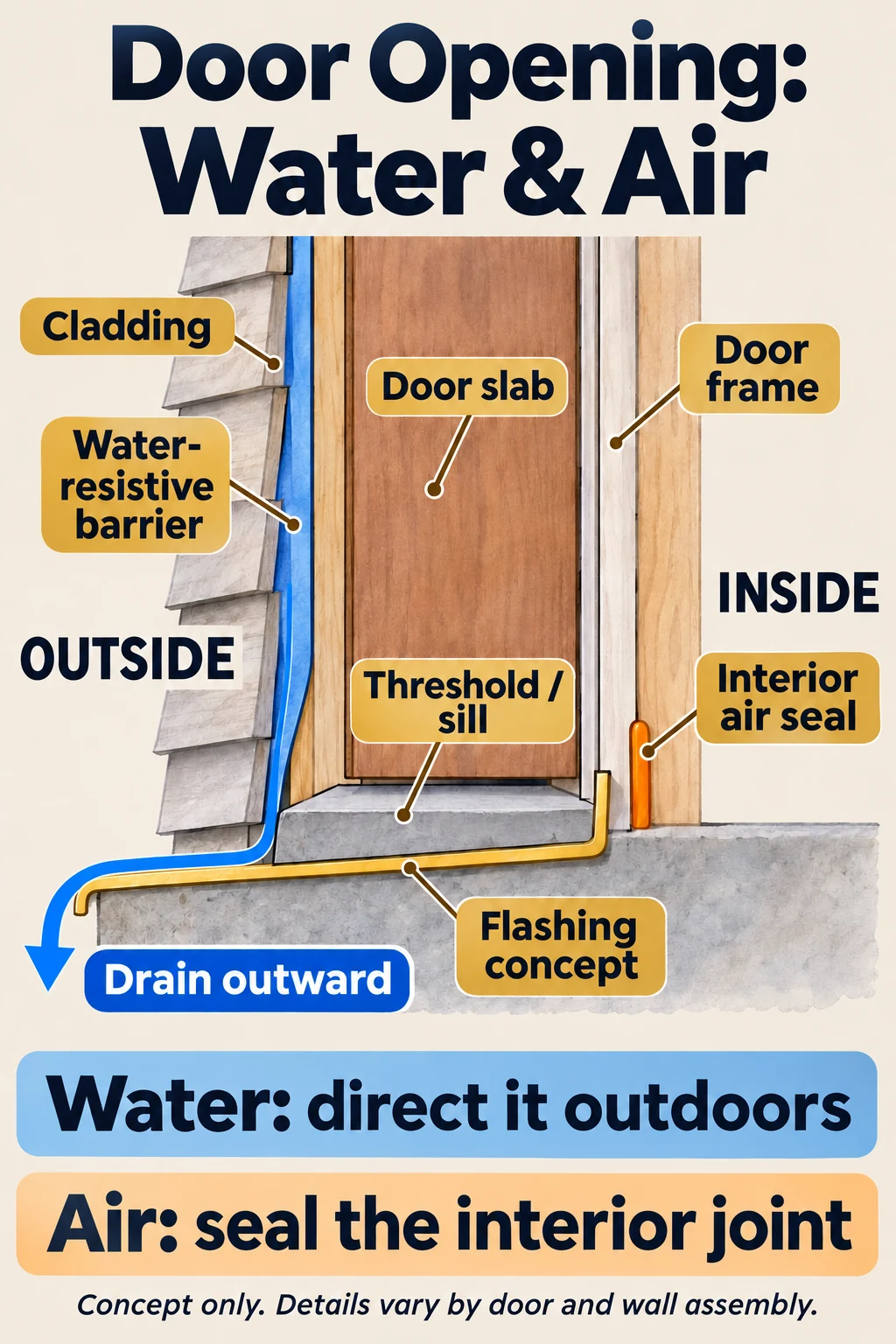
The blue path illustrates outward drainage, while orange identifies a separate interior air-sealing location. This is a concept, not an installation detail. Actual connections depend on the door, wall, exposure and applicable requirements; one arrangement does not fit every home.
Doors That Stick, Scrape, or Fail to Latch
Sticking, uneven gaps and latch misalignment can have several explanations. Hardware condition, frame movement, moisture or seasonal material changes may contribute. However, one symptom cannot establish which cause applies.
Note when the problem started and whether normal opening, closing or locking becomes difficult. Also observe loose handles, damaged hinges or closer problems where a closer exists. Ask a qualified professional to assess unusual or safety-critical hardware behavior.
Do not trim the slab, bypass locks or alter a fire-rated assembly as routine maintenance. Garage-to-house doors can have different requirements from front entries. Therefore, preserve any required closing mechanism without assuming every exterior door needs one.
Door Material Maintenance in Northern Virginia
Wood Door Care
Watch a wood door’s finish, visible swelling, splitting and moisture exposure. In addition, observe surrounding trim and glazing where present. Follow the product’s finishing instructions rather than adopting a universal repainting schedule.
For cleaning, use compatible gentle methods. Avoid abrasive chemicals, uncontrolled sanding and pressure washing toward the opening. Surface care should not damage coatings or force water into joints.
Fiberglass and Steel Door Care
For fiberglass, check the finish, surface condition, seals and hardware. For steel, also note coating damage, dents or visible corrosion concerns. Neither material removes the need for product-specific care.
Doors with glass need attention to visible damage, glazing seals and water staining. However, do not remove glass or disturb damaged glazing. Keep cleaners away from sensitive hardware when the manufacturer’s instructions require it.
Northern Virginia Seasons and Door Maintenance
Compare a door’s behavior across weather changes instead of diagnosing it from one difficult afternoon. Summer humidity, winter temperature shifts and freeze-thaw conditions can affect observations. Similarly, covered entries and exposed entrances face different moisture patterns.
During northern Virginia door maintenance checks, record recurring changes in fit, visible wetness and finish condition. Then share those notes during an assessment. The pattern can guide questions without proving a particular cause or promising energy savings.
Special Considerations for Older Painted Doors
For some pre-1978 housing, paid renovation that disturbs painted surfaces may trigger EPA Renovation, Repair and Painting requirements. Review EPA’s guidance on covered renovation work with the proposed scope.
Door work does not automatically receive the same treatment as window replacement. EPA discusses the surfaces disturbed during door removal and related exceptions. Therefore, verify the actual work and appropriate lead-safe qualifications; do not assume every small repair is exempt.
Avoid sanding, scraping or dismantling potentially lead-painted components yourself. Ask how the contractor will handle paint disturbance and protect occupants where lead-safe procedures apply.
Maintenance, Repair, or Replacement?
Use observations to start a conversation, not to make a diagnosis. Minor wear may call for compatible maintenance or repair. In contrast, persistent damage or unreliable operation may justify a broader assessment.
| Observed issue | Possible cause | Next step |
|---|---|---|
| Draft at edges | Seal or fit issue | Check the leakage path |
| Worn seals | Wear or damage | Check part fit |
| Water at sill | Several entry paths | Ask for leak review |
| Sticking | Fit or wear | Assess without forcing |
| Poor latching | Fit or hardware | Seek expert help |
| Damaged finish | Wear or moisture | Review cause and care |
| Broken glass | Visible damage | Keep clear; seek help |
If replacement becomes a reasonable option, our exterior door selection guide covers materials, glass and fit. That decision follows assessment rather than replacing routine care.
Planning Door Maintenance in Northern Virginia
First, ask what evidence supports the proposed repair or replacement. Which seals, hardware or surrounding materials need attention? Also ask how the work will address recurring moisture and preserve safe operation.
The FTC’s contractor guidance recommends comparing written estimates. Request clear materials, scope, price and timing. In addition, clarify exclusions, possible concealed damage and how any extra work requires your approval.
Northern Virginia Door Maintenance Checklist
- Read the door manufacturer’s care instructions.
- Observe safely without removing doors, glass or trim.
- Note worn seals, visible gaps and bottom-sweep condition.
- Check normal opening, closing, latching and locking.
- Record recurring moisture and weather-related changes.
- Photograph accessible trim, finish and hardware concerns.
- Preserve designed drainage openings and safe exit routes.
- Seek qualified advice for leaks or unsafe operation.
- Compare written scopes before approving work.
Final Thoughts
Northern Virginia door maintenance works best when observations lead to appropriate care. Start with the product’s instructions, keep a simple record and seek help for recurring problems. For a discussion about your entry and possible next steps, explore Novum’s door services.
Looking for more ways to maintain and improve your home’s doors? Explore our door replacement and maintenance guides for Northern Virginia homeowners to learn about common door problems, repairs, and replacement options.