
Northern Virginia storm preparedness begins well before thunder arrives. A calm-weather review can help you notice loose exterior parts, drainage concerns and repairs that need professional attention. However, no checklist makes a home storm-proof. Protect people first, and leave outdoor tasks unfinished whenever conditions become unsafe.
This guide covers preparation before severe weather, from roof observations to household planning. It separates safe early checks from work that needs qualified help. After a storm, use our separate post-storm homeowner checklist once immediate safety concerns have passed.
What Northern Virginia Storm Preparedness Means
Preparation combines routine maintenance, reliable weather information and a plan for taking shelter. It does not mean rushing through repairs when a warning arrives. Instead, identify concerns early, record what you can see safely and arrange appropriate help before severe weather threatens.
A useful plan also respects each property’s limits. Roof shape, drainage, trees and existing damage differ between homes. Therefore, a neighbor’s solution may not fit your house.
Why Early Exterior Home Checks Matter
Small visible changes can provide useful clues. For example, a loose downspout or lifted trim deserves attention even without a storm forecast. Early planning gives you time to ask questions and compare repair scopes. It also reduces pressure to attempt unsafe last-minute work.
Start With Weather Alerts and a Safe Plan
Use National Weather Service preparation guidance to review alerts and household communication. Keep more than one reliable way to receive warnings, including overnight. Discuss where household members should go, how to contact each other and any mobility or medical needs.
Also, plan for pets and keep essential contact information easy to find. Review how family members will receive instructions if they are away from home. Before weather worsens, charge devices and check your chosen alert sources. A plan should remain useful if one device loses power.
Severe Thunderstorm Watches Versus Warnings
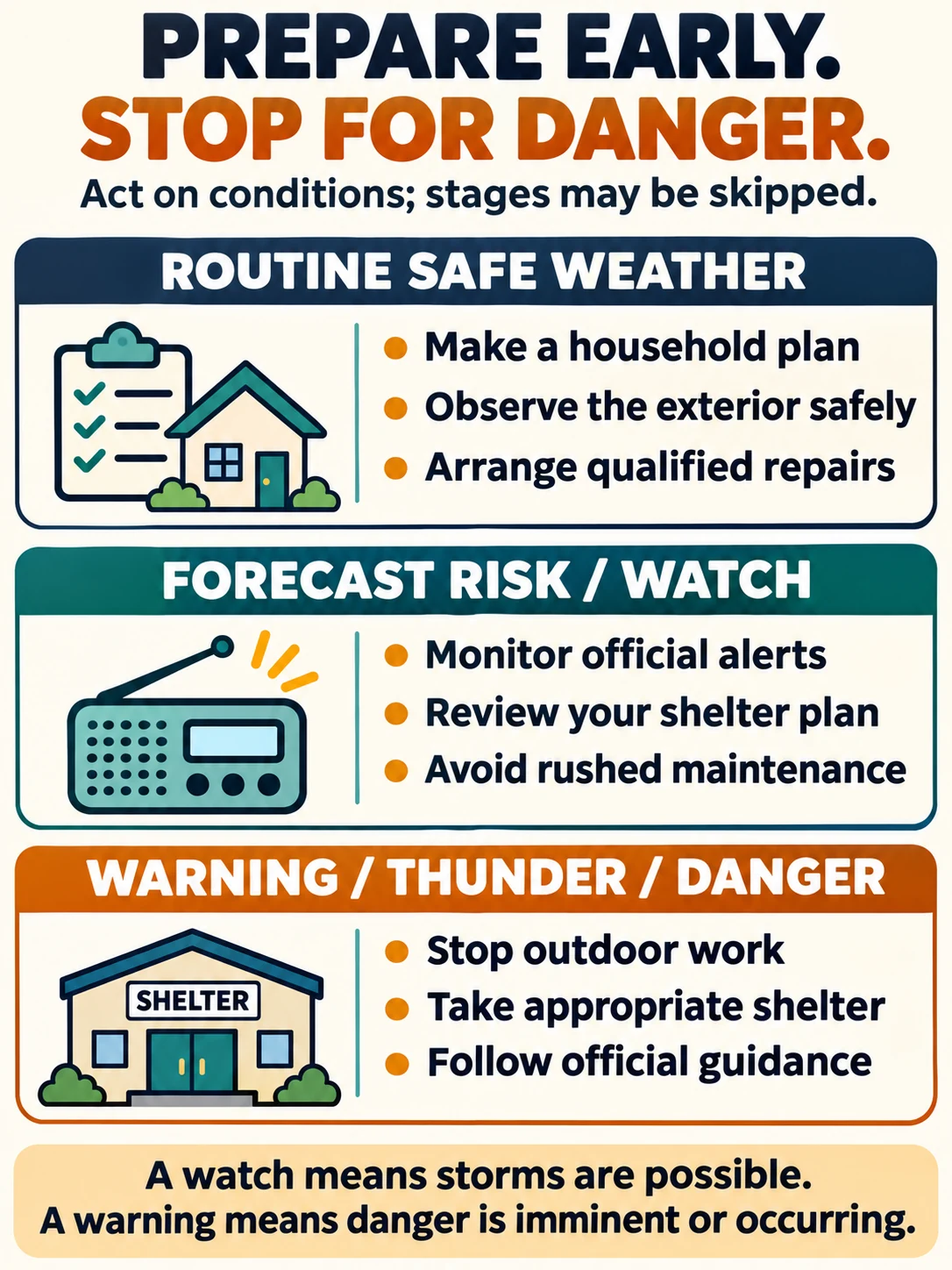
A watch means severe thunderstorms are possible in or near the watch area. A warning means spotters or radar have identified severe weather, with imminent danger to life and property. Follow the NWS watch and warning explanation. Warnings can occur without an earlier watch; never rely on a fixed preparation window.
Knowing When to Stop Outdoor Work
Thunder is a reason to stop immediately, even without a warning. Follow NWS lightning safety guidance: enter a substantial building or enclosed metal-topped vehicle with windows closed. Porches, sheds and trees are not safe lightning shelters.
Remain sheltered at least 30 minutes after the last thunder. However, that interval is not an all-clear for flooding, wind or other hazards. Follow current official instructions and choose shelter appropriate to the threat; tornado and flood guidance can require different actions.
Roof Checks for Storm Preparedness in Northern Virginia
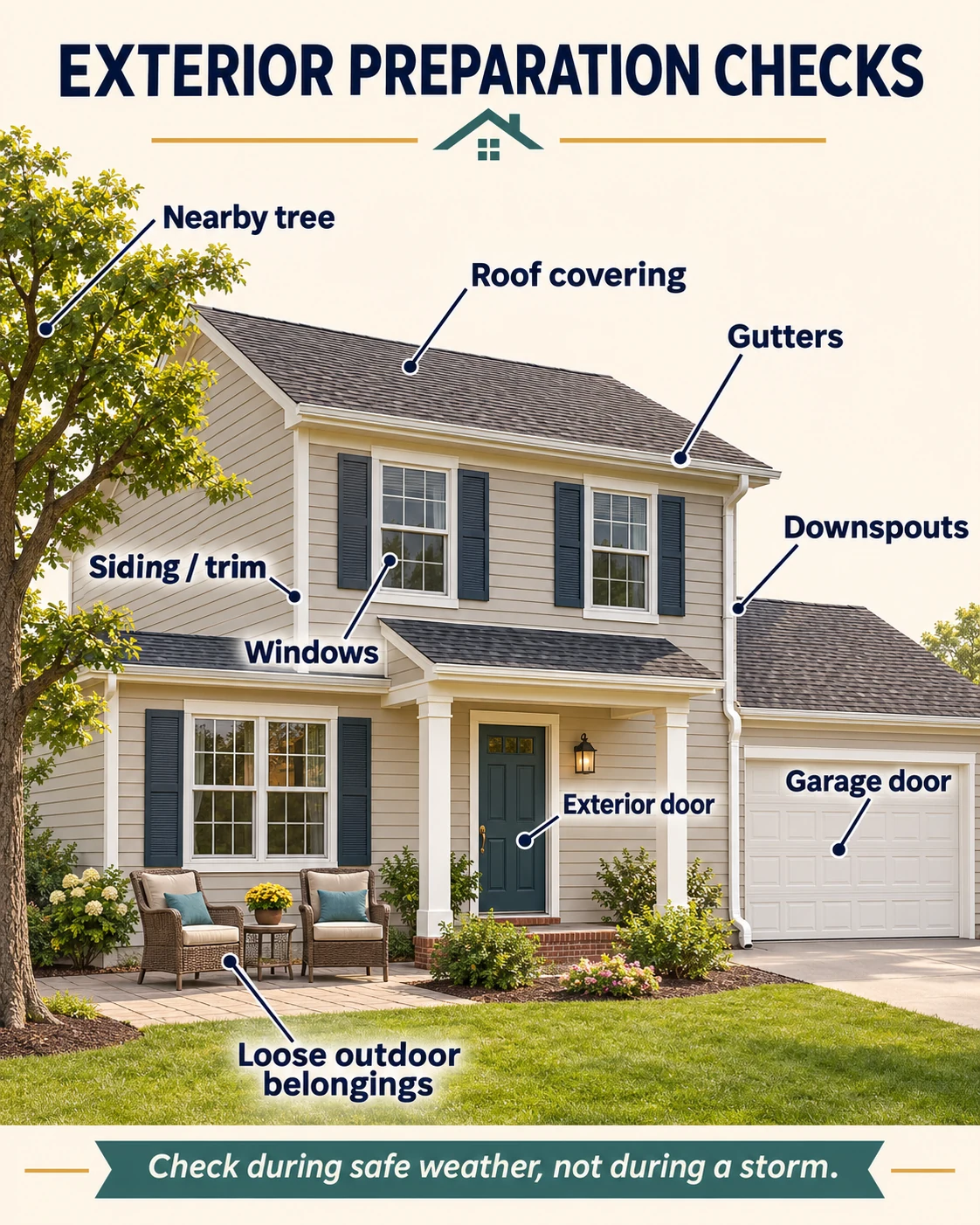
From a safe ground-level location in fair weather, look for missing or visibly lifted shingles, displaced edges and obvious loose material. For example, binoculars may help, but distance limits what you can confirm. Do not climb onto the roof or use a ladder for this checklist.
Record visible concerns for a roofer. Similarly, note existing interior stains from safely accessible rooms. However, a stain alone cannot identify the leak source, and an exterior view cannot prove the roof is sound.
Gutters and Northern Virginia Storm Preparedness
Roof Runoff and Downspout Discharge
Roof runoff should follow a connected path through gutters and downspouts to suitable discharge away from the foundation. The Department of Energy’s drainage overview explains this relationship. However, appropriate discharge depends on site conditions and applicable requirements; no single extension length suits every property.
Visible Gutter Warning Signs
Look for sagging sections, disconnected downspouts and signs of past overflow from safe ground. Arrange cleaning or repairs with qualified help when access is unsafe. Our gutter maintenance guide covers routine care in more detail. Do not test drainage outdoors during dangerous weather.
Observe Siding, Exterior Trim and Flashing
Notice loose panels, open joints or detached trim without pulling on them. Wind and water can affect existing weak points, but appearance alone does not show the full condition behind siding. Photograph concerns only from safe locations.
Flashing helps direct water at transitions and openings. Therefore, avoid covering gaps indiscriminately with sealant: some openings serve drainage functions. Ask a qualified exterior professional to assess the assembly and explain the proposed repair.
For example, repeated staining below a roof-to-wall junction can justify a closer professional review. It does not prove that one visible joint caused the problem. Keep notes about location and past weather rather than removing panels to investigate. Hidden water paths may involve several connected components.
Windows and Doors in Northern Virginia Storm Preparedness
Closing, Latching and Sealing
During safe weather, check whether accessible windows and exterior doors close and latch normally. Note damaged seals, sticking operation or visible gaps. Follow product instructions for routine care, and keep required exits usable. However, closing an opening does not guarantee protection from wind-driven debris or water.
Garage Doors and Large Openings
Have unusual garage-door movement, damage or operation assessed by a qualified garage-door specialist. Do not adjust springs, cables or tracks, or invent reinforcement. In addition, large openings have specific design and installation needs. This checklist does not establish that a door has a particular wind rating.
Secure Loose Outdoor Belongings Early
Well before hazardous weather, plan safe storage for lightweight furniture, toys and other loose items. Follow manufacturer guidance and respect lifting limits. Do not drill through roofing or siding to improvise tie-downs. If thunder or dangerous conditions arrive, leave belongings and take shelter rather than retrieving them.
Consider Trees and Overhanging Branches
From a safe distance, note visibly damaged branches, hanging limbs or changes that concern you. Arrange assessment by a qualified arborist instead of cutting or climbing yourself. For branches near power lines, contact the utility and keep clear. However, a tree’s proximity alone does not prove it is unsafe.
Watch for Water Collecting Near the Home
Recall places where water collected during earlier rain, and review those areas only when safe. Look for visible blocked surface paths without entering standing water. Persistent pooling may require a drainage professional. Avoid excavation or redirecting runoff toward neighbors, public areas or other vulnerable parts of your property.
Northern Virginia Storm Preparedness by Timing
Use routine safe weather for observations and scheduled repairs. When forecasts show risk, review alerts and your household plan. A watch is a prompt to stay informed, not permission to work outside despite thunder. At a warning or immediate danger, stop maintenance and follow official safety instructions.
| Area | Early check | Expert help |
|---|---|---|
| Roof | Visible loose parts | Roofer |
| Gutters | Sagging or gaps | Safe access |
| Siding | Loose trim | Repair scope |
| Windows | Normal closing | Faulty operation |
| Doors | Latch and seals | Fit or damage |
| Garage | Odd motion | Door specialist |
| Trees | Visible damage | Arborist or utility |
| Drainage | Past pooling | Site review |
What Not to Do as Severe Weather Approaches
Do not start roof work, gutter climbing, tree cutting or heavy lifting as storms approach. Also, avoid makeshift roof tarps and improvised structural repairs. Never enter floodwater or approach downed wires. Property tasks can wait; do not delay shelter to finish a checklist or take photographs.
When to Request a Professional Exterior Assessment
Seek qualified help for visible damage, repeated leaks, loose materials or unsafe access. Describe what you observed and when it first appeared, without guessing the cause. Novum’s Storm Damage service page explains its related exterior work. Ask the team whether your concern fits that scope; specialized tree, utility and garage-door issues need appropriate specialists.
Questions to Ask Before Approving Exterior Work
Ask which defect the proposed work addresses and what evidence supports that conclusion. Then discuss materials, access, weather limits, drainage details and any hidden conditions that could change the scope. Request written details about exclusions and follow-up. Avoid treating a repair proposal as a guarantee against future storm damage.
Also, ask who will handle each part of the work. A roofer, drainage professional and arborist may address different concerns on the same property. Clarify which items need assessment first and which can wait safely. If severe weather interrupts a scheduled visit, discuss a safer time rather than urging work to continue.
Northern Virginia Storm Preparedness Checklist
Use these reminders during routine planning. Skip any task that would put you at risk, and arrange qualified help where needed.
- Review official weather information.
- Enable more than one reliable alert method.
- Plan household contact arrangements.
- Identify shelter for the specific hazard.
- Consider mobility and medical needs.
- Observe the roof from safe ground.
- Record visible loose exterior materials.
- Note sagging gutters or disconnected downspouts.
- Review known drainage trouble spots.
- Check accessible windows close normally.
- Check exterior-door latches and seals.
- Keep required exits usable.
- Refer garage-door concerns to a specialist.
- Plan safe storage for loose belongings.
- Request qualified tree assessment when needed.
- Keep clear of branches near power lines.
- Arrange repairs well before severe weather.
- Stop outdoor work immediately for thunder or danger.
What to Do After the Storm Passes
Wait for conditions and official guidance to support safe movement. Hazards can remain after rain ends. Then use the post-storm guide linked above for cautious observations and next steps. Keep useful property records, but do not assume that any repair or type of damage has insurance coverage.
Final Thoughts on Northern Virginia Storm Preparedness
Good preparation leaves time for decisions and puts safety ahead of property tasks. Focus on reliable alerts, early observations and qualified repairs. For local forecast context, consult the NWS Baltimore/Washington weather-readiness resources. This guide is routine planning information, not a live forecast or an instruction to remain outside.
One Response